Chintpurni Devi Temple, Una: The Goddess Who Removes All Worries
Quick Summary
- Main Deity: Chhinnamastika (The Severed Headed One)
- Temple Location: Una District, Himachal Pradesh (977m altitude)
- Key Features: Worshipped as a sacred round stone (Pindi)
- Sacred Origin: One of 51 Shakti Peethas (where the head or feet of Sati fell)
- Pilgrim Highlights: 84-bell umbrella offering, special Tuesday worship
Table of Contents
Temple Overview
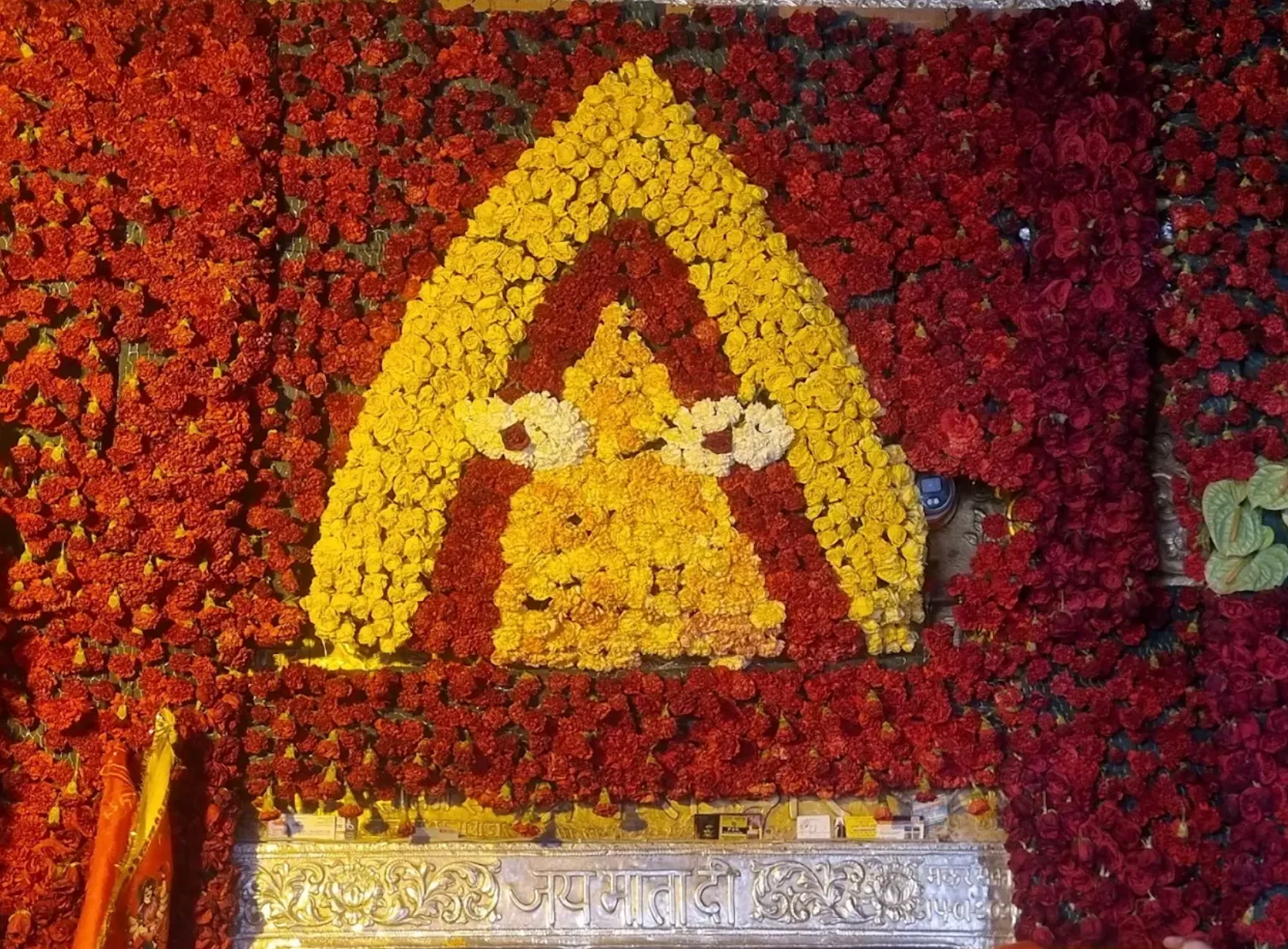
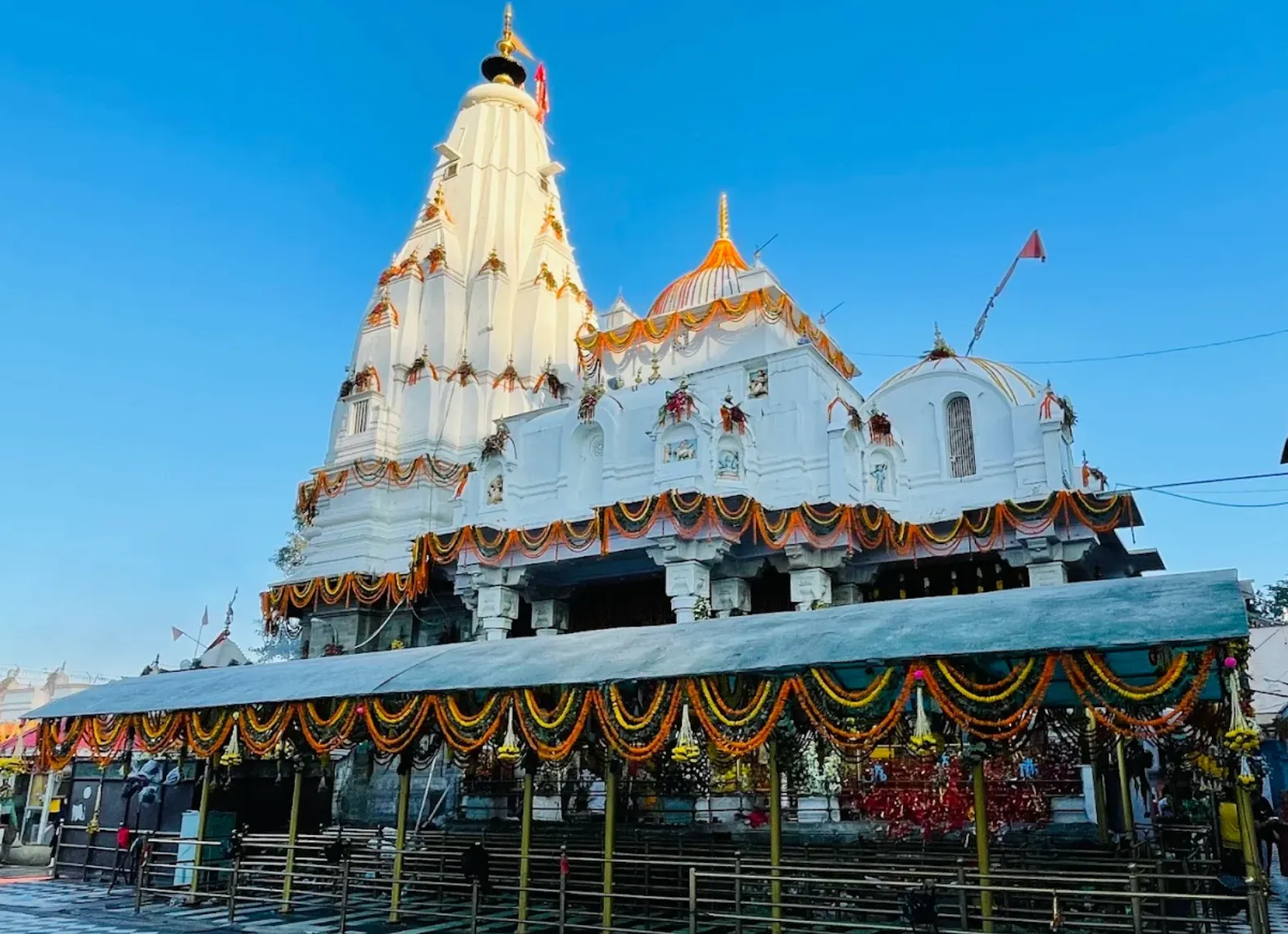
The Chintpurni Devi Temple sits on a gentle ridge of the Shivalik hills. It is located in the Una district of Himachal Pradesh. The shrine lies about 40 kilometers north of Una town. It is situated just three kilometers west of Bharwain. It is one of the 51 sacred Shakti Peethas. It is also among the most visited Devi temples in northern India.
The goddess worshipped here is Chhinnamasta. People also call her Chhinnamastika. This name translates to the severed headed one. According to Hindu theology she cut off her own head to feed her companions. This act makes her a highly complex and symbolically powerful deity.
The site sits at an elevation of roughly 977 meters. It rests in a transitional zone between the plains of Punjab and the lower hills. This border location makes it the first major Shakti shrine for pilgrims traveling north from Hoshiarpur or Ropar.
The Headless Goddess: Understanding Chhinnamasta
The deity at Chintpurni connects deeply to the theology of Chhinnamasta. She is the sixth of the ten Mahavidyas in Tantric traditions.
According to the Markandeya Purana Goddess Chandi fought a massive cosmic battle. Her two companions Jaya and Vijaya drank the blood of slain demons. Traditional texts state they remained thirsty even after the battle ended. The legend says Chandi severed her own head to satisfy them. Three streams of blood spurted from her neck. One fed Jaya and another fed Vijaya. The third stream nourished the severed head held in her own hand.
This profound event represents the separation of pure consciousness from the physical body. It symbolizes the liberation of awareness from material limits.
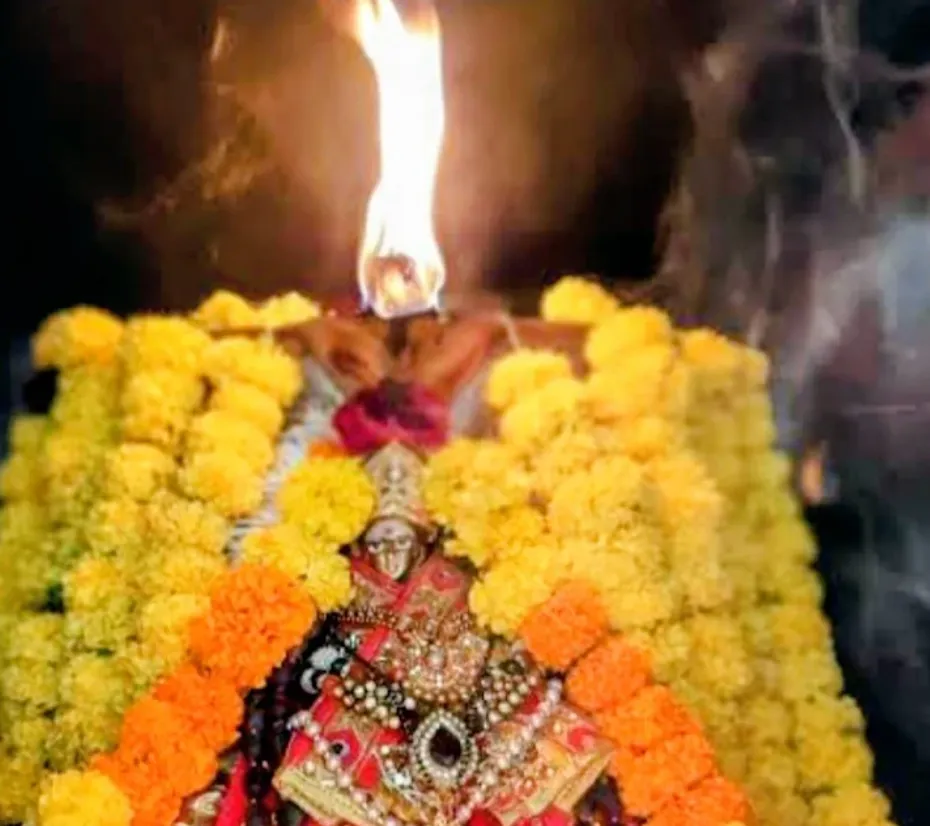
The three streams represent three vital energy channels in Tantric philosophy. At Chintpurni priests worship the goddess as a sacred round stone called a Pindi. The violent imagery of the Chhinnamasta form remains implicit in the tradition. It is not physically displayed in the main sanctum.
Discovery and Founding by Pandit Mai Das
The founding story of Chintpurni is highly specific. A Brahmin priest named Pandit Mai Das traveled through this area centuries ago. He belonged to the village of Ripoh Muchilian in the Amb region. He was traveling to visit his relatives in Pirthipur. The village now called Chintpurni lay directly on his route.
Local oral traditions say he heard divine music from a nearby hillock. He climbed up and reportedly saw a radiant young girl with a lion. Local folklore states she identified herself as Goddess Durga. She instructed him to establish her presence there as a stone Pindi. She asked his family to worship the shrine twice daily.
The legend says he briefly lost his vision after leaving the spot. He apologized to the goddess and his sight returned. He built a thatched hut over the sacred stone. The village revenue records still use the name Chhaproh. This name comes from the word chhappar meaning thatched hut. The descendants of Pandit Mai Das still serve as official priests today. This unbroken family connection spans roughly three hundred years.
The Four Shiva Temples That Guard Chintpurni
One unique feature of Chintpurni is its protective geographic layout. Puranic texts state four Shiva temples must guard the abode of Chhinnamastika. Remarkably four ancient Shiva shrines sit at equal distances from Chintpurni.
The Sacred Compass
- East: Kaleshwar Mahadev Temple
- West: Narayana Mahadev Temple
- North: Muchkund Mahadev Temple
- South: Shiva Bari Temple
Many scholars view this precise spatial arrangement as highly significant. It aligns perfectly with ancient Puranic descriptions of the sacred site. Temple priests consider this the strongest proof that Chintpurni is the true home of Chhinnamastika.
Temple Architecture and Layout
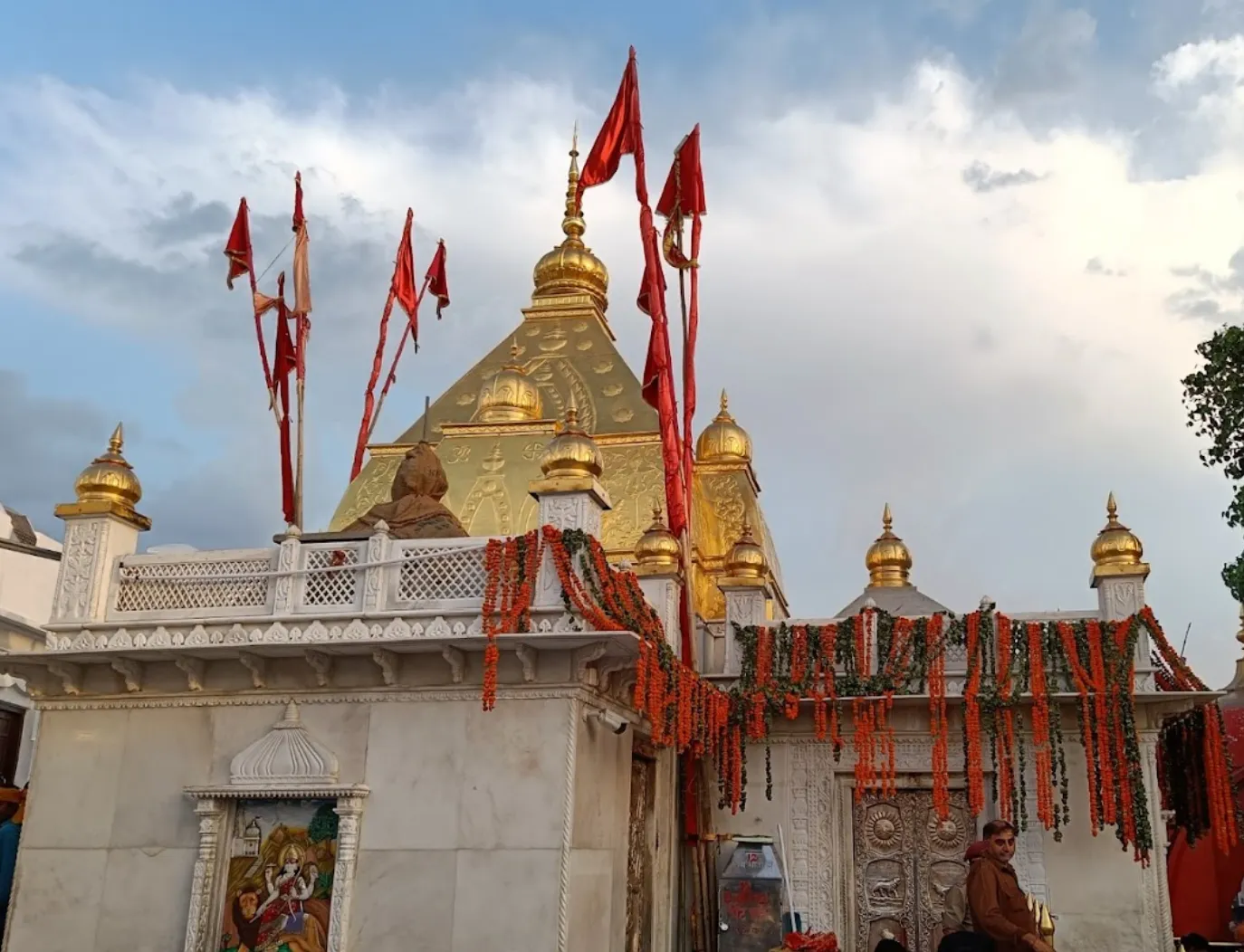
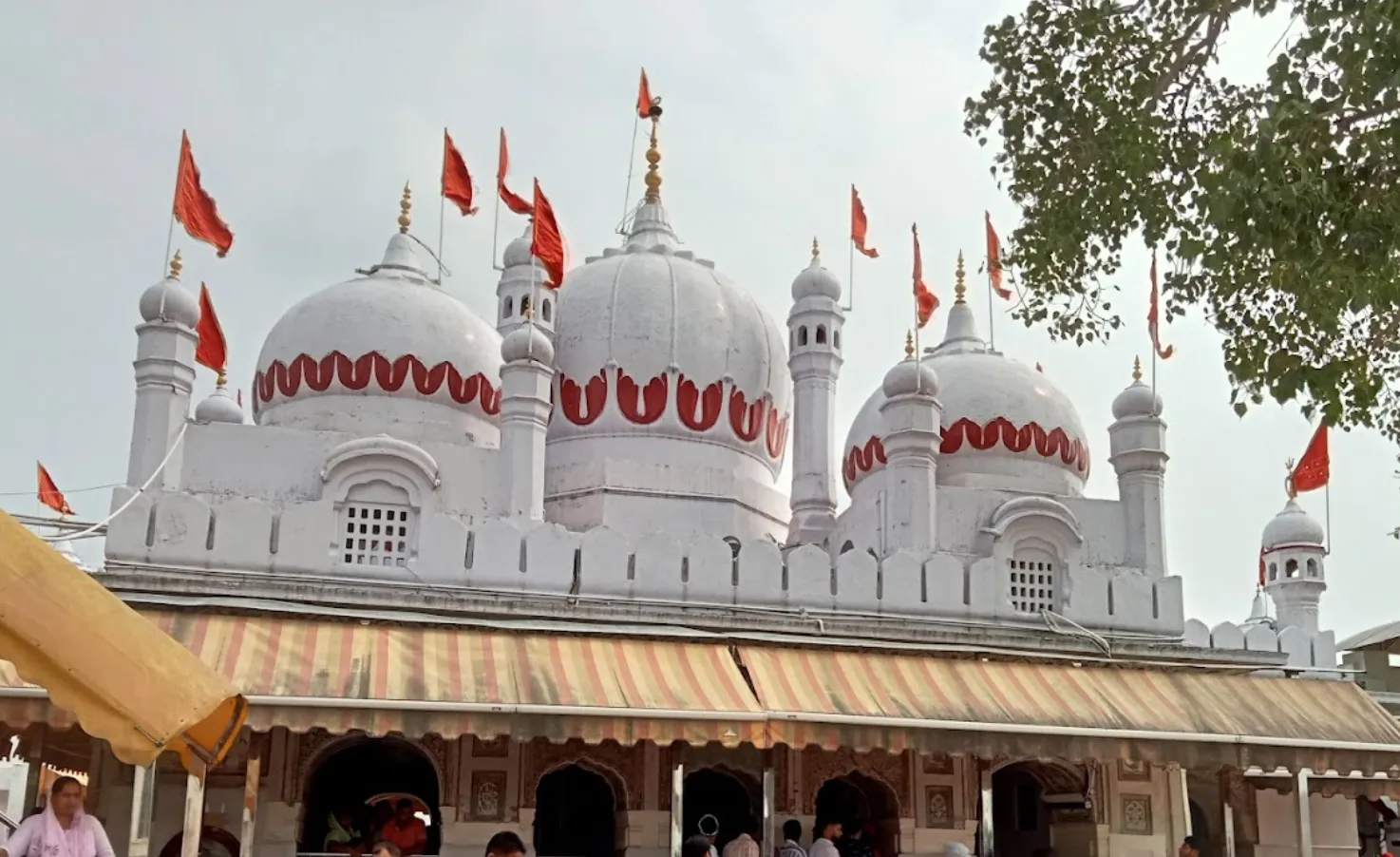
The Chintpurni temple is a simple single story stone structure. It features a square base and a central dome. The main entrance faces the north direction. An ancient Banyan tree stands on a raised platform at the entry. Statues of Lord Ganesha and Lord Hanuman sit on the opposite side.
Devotees ring brass bells hung along the entrance corridor. The inner sanctum houses the sacred Pindi of Mata Chintpurni. Priests place it on a beautiful white marble palanquin. Hereditary priests sit beside the Pindi to perform daily rituals.
The temple roof features carved stone images of Hindu deities. The stone pathway leading to the temple has deep historical significance. Diwan Dina Nath constructed these stairs. He was a prominent minister in the court of Maharaja Ranjit Singh.
Adjacent to the main shrine is a deep water tank for ritual bathing. A small Shiva shrine with a sacred fire pit stands nearby. Ascetics from the Guru Gorakhnath tradition maintain this fire.
Unique Offerings and Tuesday Worship
The 84-Bell Umbrella
A highly unique custom here involves an 84 bell umbrella. Devotees offer this special metal canopy on the eighth day of Navratri. The number 84 carries deep significance in Hindu cosmic philosophy. It represents the 8.4 million life forms a soul must experience. By offering this umbrella devotees pray to break the cycle of rebirth. This specific ritual has no exact parallel in other Shakti temples.
The standard offering bundle here is also highly specific. It contains seven pieces of betel nut and one piece of coconut. It also includes a red flag and multi colored cotton yarn. This combination is unique to the Chintpurni tradition.
Tuesdays hold special significance for worship at Chintpurni. Local believers consider the goddess highly receptive to prayers on this day. Devotee numbers increase heavily on Tuesdays throughout the entire year.
The Annual Fair: Mata Da Mela
The temple hosts a major fair called Mata Da Mela three times a year.
- Chet Navratri: This nine day festival happens during spring in March or April.
- Sawan Mela: This ten day fair occurs during the monsoon month of July or August.
- Asanj Navratri: This nine day festival happens during autumn in September or October.
The Sawan Mela is highly distinctive. It follows the specific sacred calendar of Chintpurni rather than standard Navratri dates.
Plan Your Complete Himachal Devi Darshan
Embark on the ultimate spiritual journey across the majestic Himalayas. Connecting the powerful Shakti Peethas—including Brajeshwari, Jwala Ji, Chintpurni, and Chamunda Devi—requires careful route planning through mountainous terrain. Ensure a seamless, deeply spiritual pilgrimage for you and your family by organizing your temple circuit with regional experts.
Explore Devi Darshan RoutesTravel Planning For the Devi Circuit With Palampur Taxi Service
Planning your Devi temple circuit requires reliable transportation. Many pilgrims visit Chintpurni along with Jwala Ji and Kangra Devi in a single trip. Driving through the Shivalik hills requires experience and great caution.
Booking a trusted local cab makes this spiritual journey much safer. Palampur Taxi Service offers dedicated vehicles for the entire Shakti Peetha circuit. Their drivers know the mountain roads and the fastest temple routes.
Using a local taxi helps you manage darshan timings easily. It is highly convenient for families traveling with young children or elders. Palampur Taxi Service ensures you travel safely between shrines without waiting for crowded public buses.
How to Reach Chintpurni Temple
By Air
The Kangra Airport in Gaggal is the closest airport option. It is located roughly 70 kilometers from the temple.
By Rail
The Amb Andaura railway station is the nearest broad gauge station. It sits only 20 kilometers away and receives modern express trains. The Una Himachal railway station is another option about 55 kilometers away.
By Road (Taxi/Bus)
Regular buses connect Chintpurni to major nearby cities. Hoshiarpur in Punjab is roughly 45 kilometers away. The drive from Kangra takes about two hours depending on mountain traffic.
Visitor Information
- Summer Timings: 4:00 AM to 10:00 PM
- Winter Timings: 5:00 AM to 9:30 PM
- Entry Fee: There is no entry ticket required for darshan.
- Dress Code: Visitors must wear modest clothing. All devotees must cover their heads before entering.
- Photography: Taking photos is strictly prohibited inside the main sanctum.
Frequently Asked Questions
What does the name Chintpurni mean?
The word chint means worry or sorrow in Hindi. The word purni means fulfiller or remover. The goddess removes the worries of her devotees.
Which body part of Sati fell at Chintpurni?
Two traditions coexist regarding this site. One states the feet of Sati fell here. Another local tradition identifies this as the site of her head. The surrounding Shiva temples strongly support the headless goddess identification.
What are the temple timings for daily darshan?
The temple opens early at 4:00 AM during summer and 5:00 AM during winter. It remains open until roughly 10:00 PM depending on the season.
Is there a specific dress code for the temple?
Yes. Both men and women must wear modest clothing. Devotees must cover their heads with a scarf or cloth inside the premises.
How far is Chintpurni from Jwala Ji Temple?
The Jwala Ji Temple is located about 35 kilometers from Chintpurni. The drive between the two shrines usually takes just over an hour.
Are cameras allowed inside the sanctum?
No. Photography and videography are completely banned inside the main garbha griha to respect the sanctity of the goddess.