Brajeshwari Devi Temple, Kangra: The Thunderbolt Goddess of Nagarkot
Quick Summary
- Main Deity: Vajreshwari (The Lady of the Thunderbolt)
- Temple Location: Kangra Town, Himachal Pradesh (738m altitude)
- Key Timings: Summer: 5 AM – 9 PM | Winter: 6 AM – 8 PM
- Pilgrim Highlights: Unique three-dome architecture, sacred Pindi, and Makar Sankranti Butter Festival
- Best Visit Time: Navratri (March/April & Sept/Oct) or January for the Butter Festival
Table of Contents
What Is the Brajeshwari Devi Temple?
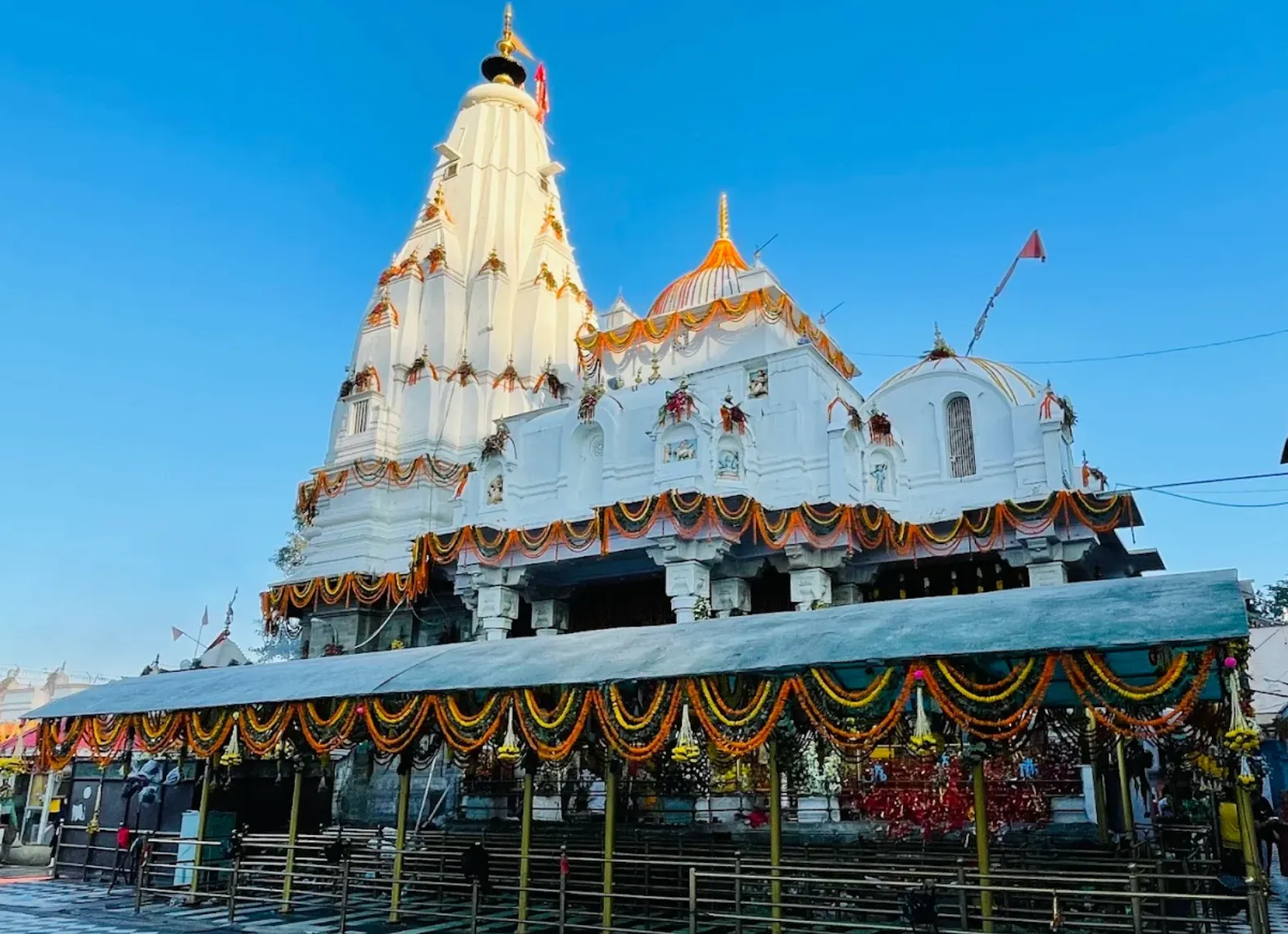
The Brajeshwari Devi Temple stands in the ancient town of Kangra in Himachal Pradesh. People also call it the Vajreshwari Devi Temple or Kangra Devi Temple. It is one of the 51 sacred Shakti Peethas in India. Many devotees believe the left breast of Goddess Sati fell here after Lord Vishnu severed her body.
The goddess here is worshipped as Vajreshwari. This name translates to the Lady of the Thunderbolt. She is considered a fierce form of Durga who destroyed the demon Kalikala using a thunderbolt weapon. This temple is the most visited religious site in the Kangra district. It ranks highly among the five principal Shakti shrines of Himachal Pradesh.
Fast Facts: Nagarkot
The temple sits at an elevation of roughly 738 meters. It is located in the ancient quarter of Kangra. Historical texts and Mughal chronicles refer to this area as Nagarkot. These records describe Nagarkot as one of the wealthiest temple cities in northern India.
Historical Origins and Invasion Timeline
The documented history of Brajeshwari Devi Temple is highly turbulent. Very few Shakti Peethas have faced so many recorded attacks and rebuilding efforts.
According to local traditions, the Pandavas constructed the original temple during their forest exile. Temple legends suggest Goddess Durga appeared in their dreams. She instructed them to build a temple at Nagarkot for protection. The legend claims the Pandavas built the shrine overnight. This account places the mythological origin in ancient times. Historians date the earliest verifiable stone structure to before the 9th century CE.
Historical Timeline
- Before 1009 CE: The temple existed as a prosperous shrine. It was famous across the subcontinent for its enormous wealth. Records mention gold, silver bells, pearls, and diamonds.
- 1009 CE: Mahmud of Ghazni raided the temple for the first time. Historical records indicate he plundered it five times. He left a garrison at Nagarkot.
- Post-Invasion Rebuilding: The Katoch rulers of Kangra restored the temple after these raids. They considered themselves the hereditary protectors of the goddess.
- 1360 CE: Firoz Shah Tughlaq attacked and looted the temple. Court historians recorded that he took a library of Sanskrit texts. He later had these translated into Persian.
- Mughal Period: Emperor Akbar rebuilt and patronized the temple. His revenue minister Todar Mal contributed heavily to this reconstruction.
- 1905: The Great Kangra Earthquake leveled the entire temple complex. This massive earthquake also destroyed the nearby Kangra Fort.
- 1920: The Kangra Restoration Committee rebuilt the temple. Devotees from Amritsar funded the new marble courtyard.
Mythology: Three Competing Origin Stories
Three distinct mythological explanations exist for the goddess at Kangra. Each comes from a different textual or oral tradition.
The Shakti Peetha Legend
The primary narrative follows the Sati myth from the Devi Bhagavata Purana. Sati immolated herself at the yajna of Daksha. Lord Shiva performed a destructive dance while carrying her body. Lord Vishnu then used his weapon to cut her body into 51 parts. According to this tradition, the left breast fell at Nagarkot. The divine energy manifested here as Vajreshwari.
Many devotees believe the divine energy manifested here as Vajreshwari, representing raw cosmic power that destroys evil with sudden impact.
The Kalikala Legend
A separate local tradition involves the demon Kalikala. This demon wreaked havoc on the gods. The Mother Goddess descended to Nagarkot at their request. She killed Kalikala using a powerful thunderbolt. This event gives the goddess her name. Some local accounts mention that the body of demon king Jalandhara is buried beneath this site.
The Pandava Vision
Local oral traditions describe a dream during the Pandava exile. Goddess Durga directed them to build her a temple at Nagarkot. She promised them protection in return. This legend links the founding of the shrine to the heroes of the Mahabharata.
The Goddess: Who Is Vajreshwari?
Vajreshwari is a fierce emanation of Goddess Durga. The name comes from two Sanskrit words. Vajra means thunderbolt and Ishwari means sovereign goddess. Many Shakti shrines feature the deity in a gentle form. Vajreshwari instead represents raw cosmic power. Devotees view her as a force that destroys evil with sudden impact.
Inside the sanctum, the goddess is not worshipped through a human shaped idol. Priests worship a sacred natural stone formation called a Pindi. This stone represents the divine feminine energy in its essential state. This style of worship continues ancient traditions that predate standard Hindu temple idols.
The temple also houses a small shrine dedicated to Bhairava. He serves as the guardian of Vajreshwari in the Shakti Peetha tradition. Another separate shrine commemorates Dhyanu Bhagat. He was a legendary devotee from Nadaun village.
Temple Architecture: Three Domes and Their Meaning
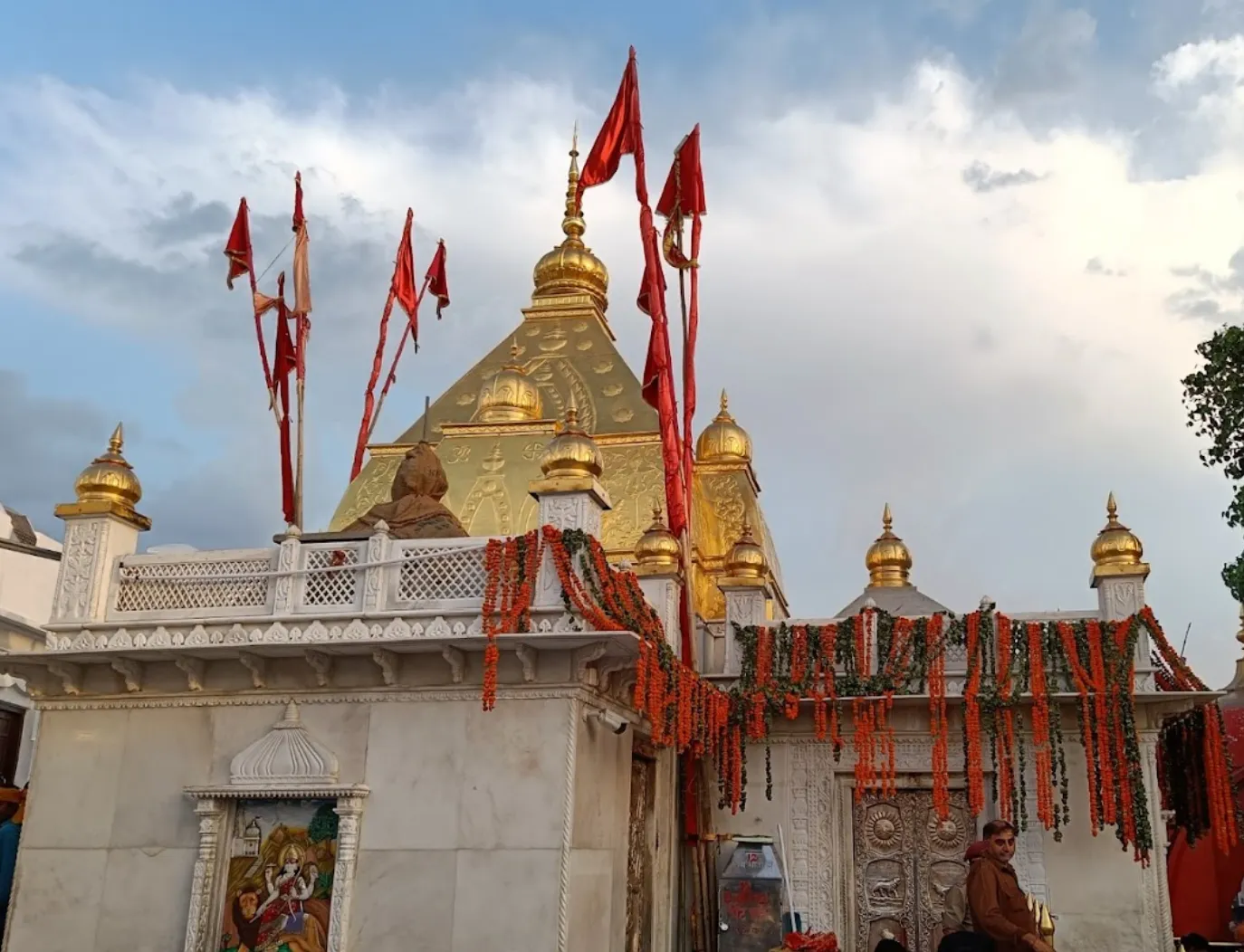
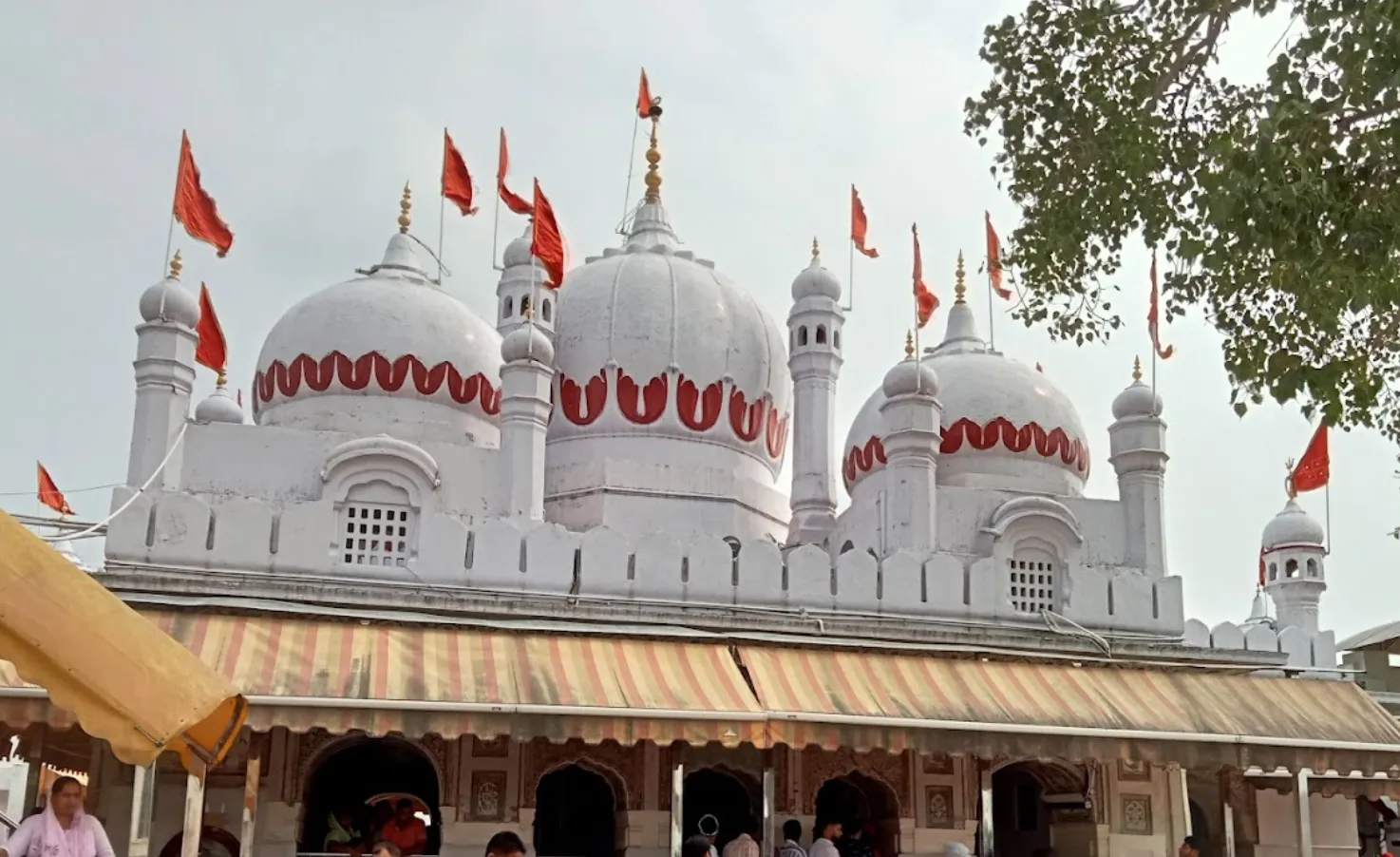
The present structure was rebuilt after the 1905 earthquake. It looks very different from the original stone temple that once stood here. The rebuilt temple features three distinct domes. This architectural choice makes the building immediately recognizable.
According to temple authorities, the three domes represent different religious traditions. They embody the philosophy of equal respect for all religions. This design makes the Brajeshwari Devi Temple quite unique. It is a rare Hindu shrine that explicitly incorporates an interfaith architectural message.
The entrance gate features a traditional drum house. Musicians historically played here to announce rituals and worship times. The design of this main gate resembles the nearby Bassi Fort. The interior features ornate silver doors and detailed carvings. A fortified stone wall encloses the entire outer boundary. Busy market bazaars line the walking approach to the gate.
Rituals and Daily Worship
The temple priests worship the goddess daily through a structured sequence. The rituals begin well before sunrise.
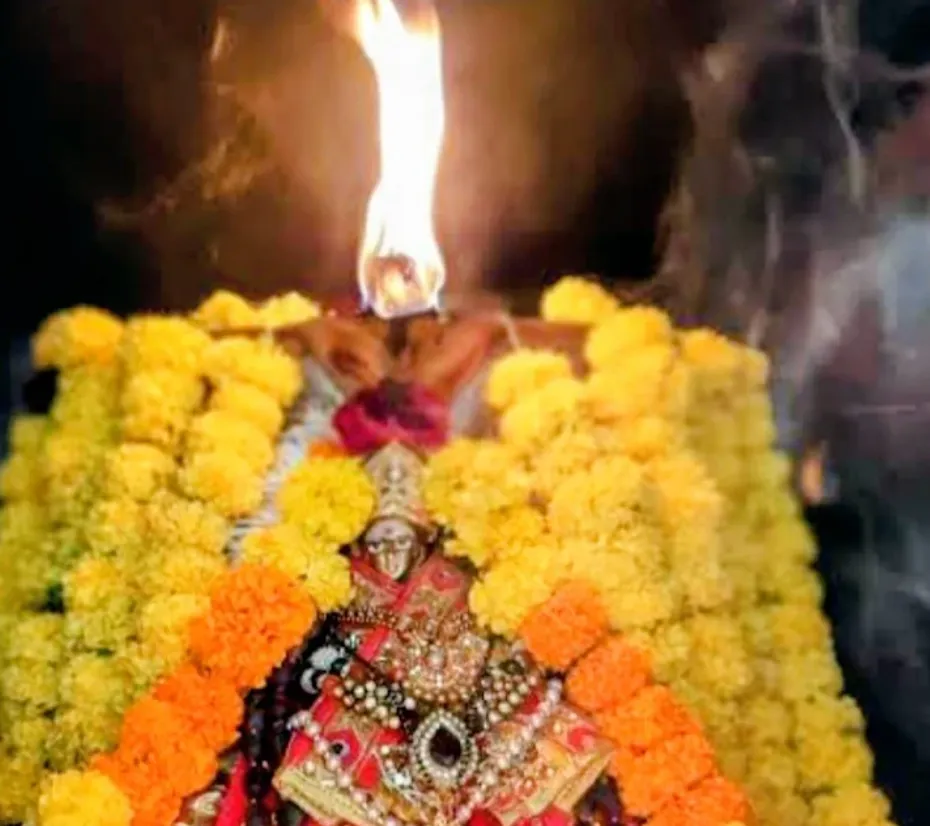
The Mangala Aarti is the first official worship of the day. Priests perform a ritual bathing of the sacred stone. They use a mixture of milk, curd, honey, ghee, and sugar. They then adorn the Pindi with fresh flowers and red cloth.
The afternoon ritual involves offering cooked food to the deity. This meal typically includes khichdi and traditional sweets. The evening Sandhya Aarti happens at dusk. This evening worship draws the largest number of visiting pilgrims.
The Unique Makar Sankranti Butter Ritual
One of the most famous customs here happens in January. It is the butter festival observed during Makar Sankranti.
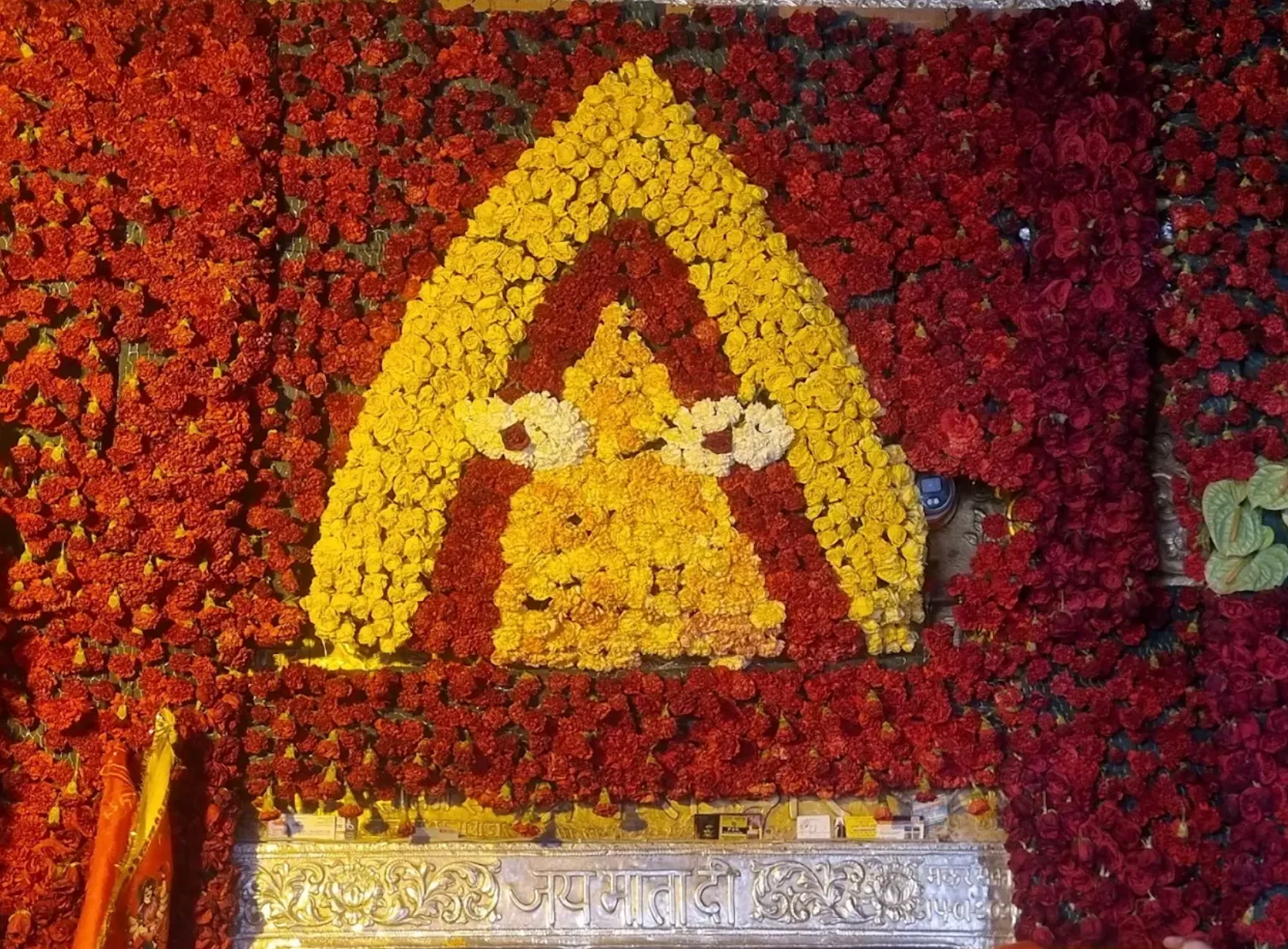
Temple legends suggest Goddess Durga suffered wounds after killing Mahishasura. She applied clarified butter to her body at Nagarkot to heal herself. Priests commemorate this event by preparing a massive amount of purified butter. They wash the butter repeatedly with cold water. They apply this butter directly to the Pindi of the goddess.
Pilgrim Tip: Butter Festival
This special ritual lasts for a full week. Temple authorities distribute the sanctified butter to devotees at the end. Many devotees believe this butter holds healing properties. If you plan to attend, book your accommodation and taxi service well in advance as pilgrims travel from across northern India specifically for this unique event.
Dhyanu Bhagat: The Devotee Who Gave His Head
The story of Dhyanu Bhagat is a major local legend. He lived in Nadaun during the reign of Emperor Akbar.
Legend has it that Dhyanu Bhagat was traveling to a temple with pilgrims. Emperor Akbar detained him at court. The emperor demanded proof of the goddess and her powers. Local accounts say Dhyanu Bhagat offered his own head as a sacrifice. He severed his own head in devotion. According to the legend, divine intervention reunited his head with his body. This miracle supposedly made the emperor a believer.
A subsidiary shrine inside the complex honors Dhyanu Bhagat. People across the Kangra region worship this devotee as a saint.
Festivals at Brajeshwari Devi Temple
Navratri Festivals
The temple celebrates two major Navratri festivals each year. The spring festival happens in March or April. The autumn festival happens in September or October. The complex sees continuous worship over nine days. Priests perform special prayers at dawn and dusk. The temple feeds thousands of pilgrims through free community meals.
Navratri Crowd Warning
Wait times can extend to several hours during Navratri. Prepare for massive crowds, arrive early in the morning, and secure transportation ahead of time to avoid last-minute hurdles.
Makar Sankranti
The week long butter festival happens in mid January. This event draws massive crowds of regional pilgrims.
Diwali and Dussehra
The temple management illuminates the entire complex during these festivals. Special prayers take place to honor the victory of good over evil.
Pilgrimage Significance and Sacred Geography
Brajeshwari Devi Temple is a vital part of the Himachal Pradesh pilgrimage circuit. It is one of five major Shakti Peethas in the state. The others are Chintpurni, Jwalamukhi, Chamunda Devi, and Naina Devi. Many pilgrims consider completing all five shrines a highly sacred duty.
The temple sits very close to the historic Kangra Fort. This connects the shrine directly to the Katoch dynasty. They are one of the oldest surviving royal families in India. Historical records indicate they protected this shrine for centuries. The fort and the temple form the historical core of ancient Trigarta.
Nearby sacred sites include the Masroor Rock Cut Temples. These monolithic shrines sit about 40 kilometers away. The famous Chamunda Devi Temple is roughly 25 kilometers from Kangra.
Plan Your Complete Himachal Devi Darshan
Embark on the ultimate spiritual journey across the majestic Himalayas. Connecting the powerful Shakti Peethas—including Brajeshwari, Jwala Ji, Chintpurni, and Chamunda Devi—requires careful route planning through mountainous terrain. Ensure a seamless, deeply spiritual pilgrimage for you and your family by organizing your temple circuit with regional experts.
Explore Devi Darshan RoutesPlanning Your Temple Visit With Palampur Taxi Service
Navigating the hilly roads of the Kangra valley requires careful planning. Many pilgrims travel here to complete the sacred Devi circuit. This involves visiting multiple temples spread across different mountain ridges.
Relying on public buses for this entire route can be difficult and time consuming. Booking a reliable local transport provider makes the pilgrimage much easier. Palampur Taxi Service offers excellent support for visitors exploring the Kangra region. Their drivers understand the local terrain and the temple routes perfectly.
Using Palampur Taxi Service helps families travel safely between the major shrines. A dedicated cab allows you to match your travel schedule with temple darshan timings. This convenience is especially helpful during the crowded Navratri festival days. You can easily plan day trips to Kangra Fort and the Masroor temples from your hotel.
How to Reach Brajeshwari Devi Temple
By Air
The Kangra Airport is also known as Gaggal Airport. It is located roughly 10 kilometers from the temple. Daily flights connect this airport to Delhi and Chandigarh.
By Rail
The Kangra Mandir station is the closest railway stop. It is a narrow gauge station located about 3 kilometers away. Pathankot Junction is the nearest major broad gauge railway station. Pathankot is approximately 85 kilometers from Kangra.
By Road (Taxi/Bus)
Kangra connects well to major cities via national highways. You can easily find buses and taxis from nearby towns. Dharamshala is 20 kilometers away. Chandigarh is roughly 220 kilometers from the temple.
Visitor Information
- Temple Timings: 5:00 AM to 9:00 PM during summer months. 6:00 AM to 8:00 PM during winter months.
- Entry Fee: There is no entry fee for regular darshan.
- Dress Code: Visitors must wear modest clothing. Everyone must cover their heads inside the temple complex.
- Photography: Taking photos is strictly prohibited inside the main sanctum.
- Parking: Municipal parking is available a short walk from the main temple street.
Frequently Asked Questions
What is the Brajeshwari Devi Temple famous for?
The temple is a revered Shakti Peetha in northern India. Local traditions state the left breast of Goddess Sati fell here. The temple is famous for its unique three dome architecture and the sacred stone Pindi.
What are the temple opening and closing timings?
The temple generally opens at 5:00 AM and closes at 9:00 PM during summer. Winter timings are slightly shorter. The doors open at 6:00 AM and close at 8:00 PM in colder months.
Is there a specific dress code for entering the temple?
Yes. All visitors must wear modest and respectful clothing. Both men and women must cover their heads before entering the temple complex.
How long does the darshan take on regular days?
On normal weekdays, the darshan process takes about 30 to 45 minutes. Wait times can extend to several hours during Navratri and Makar Sankranti.
Is there a VIP darshan facility available?
The temple trust does not sell paid VIP tickets. However, they manage special entry queues to assist elderly visitors and differently abled devotees.
What is the Makar Sankranti butter festival?
This is a unique yearly ritual held in January. Priests wash large amounts of clarified butter and apply it to the main deity stone. Devotees believe this honors the goddess healing her battle wounds.
Can tourists visit the nearby Kangra Fort on the same day?
Yes. The historic Kangra Fort is located just a few kilometers from the temple. Most visitors easily combine both sites into a single morning or afternoon trip.