
9 Shakti Peethas · 3 States · Updated 2026
9 Devi Yatra —
Complete Route Guide
🙏 Nau Devi Darshan
|
⛰️ Haryana · HP · J&K
|
🚗 5–9 Day Circuit
|
Updated 2026
The Nau Devi Darshan covers nine principal manifestations of the Goddess across Haryana, Himachal Pradesh, and Jammu & Kashmir. Verified distances, 5/7/9-day itineraries, accommodation costs, elderly accessibility, and private taxi packages from 98053 12304.
9
Shakti Peethas
3 States
Haryana · HP · J&K
~1,000 km
Total from Chandigarh
5–9 Days
Itinerary Options
What Is the 9 Devi Yatra?
Nau Devi Darshan — The Complete North Indian Shakti Circuit
The 9 Devi Yatra is one of the most revered pilgrimage circuits in North India. Devotees also call it the Nau Devi Darshan or Nav Devi Yatra. This sacred route covers nine principal manifestations of the Goddess, with shrines spanning Haryana, Himachal Pradesh, and Jammu & Kashmir.
Believers consider all nine locations as powerful Shakti Peethas or Siddha Peethas where the divine feminine is permanently and continuously present. The complete circuit covers roughly 1,000 to 1,100 kilometres by road from Chandigarh and requires five to nine days depending on your pace.
The Kangra Valley — Spiritual Heart of the Circuit
Six out of the nine temples sit in the Kangra and Una districts of Himachal Pradesh. This intense geographic concentration makes the Kangra Valley the absolute spiritual centre of the entire 9 Devi Yatra. A Palampur-based driver who knows the Kangra circuit delivers decisive advantages in parking, queue timing, and route selection at every stop.
Also Planning the 4 Devi Circuit?
The 4 Devi Darshan covers only the four classical Shakti Peethas in Himachal Pradesh in just 2 days — it is the fastest and most scripturally complete Himachal pilgrimage for time-limited devotees. Read our complete 4 Devi Darshan guide →
All 9 Temples
Complete 9 Devi Name List and Places
Nine temples. Nine manifestations. Three states. The verified complete list with location and state for every shrine on the circuit.
| # | Temple Name | Town / Area | District | State |
|---|---|---|---|---|
| 1 | Mansa Devi Temple | Panchkula | Panchkula | Haryana |
| 2 | Kalka Devi Temple | Kalka Bazaar | Panchkula | Haryana |
| 3 | Naina Devi Temple | Naina Devi Hill | Bilaspur | Himachal Pradesh |
| 4 | Chintpurni Devi Temple | Chintpurni | Una | Himachal Pradesh |
| 5 | Jwala Ji Temple | Jwalamukhi | Kangra | Himachal Pradesh |
| 6 | Baglamukhi Devi Temple | Bankhandi, Dehra | Kangra | Himachal Pradesh |
| 7 | Brajeshwari Devi Temple | Kangra Town | Kangra | Himachal Pradesh |
| 8 | Chamunda Devi Temple | Baner River | Kangra | Himachal Pradesh |
| 9 | Vaishno Devi Temple | Trikuta Hills, Katra | Reasi | Jammu & Kashmir |
01
Stop 1 · Panchkula, Haryana
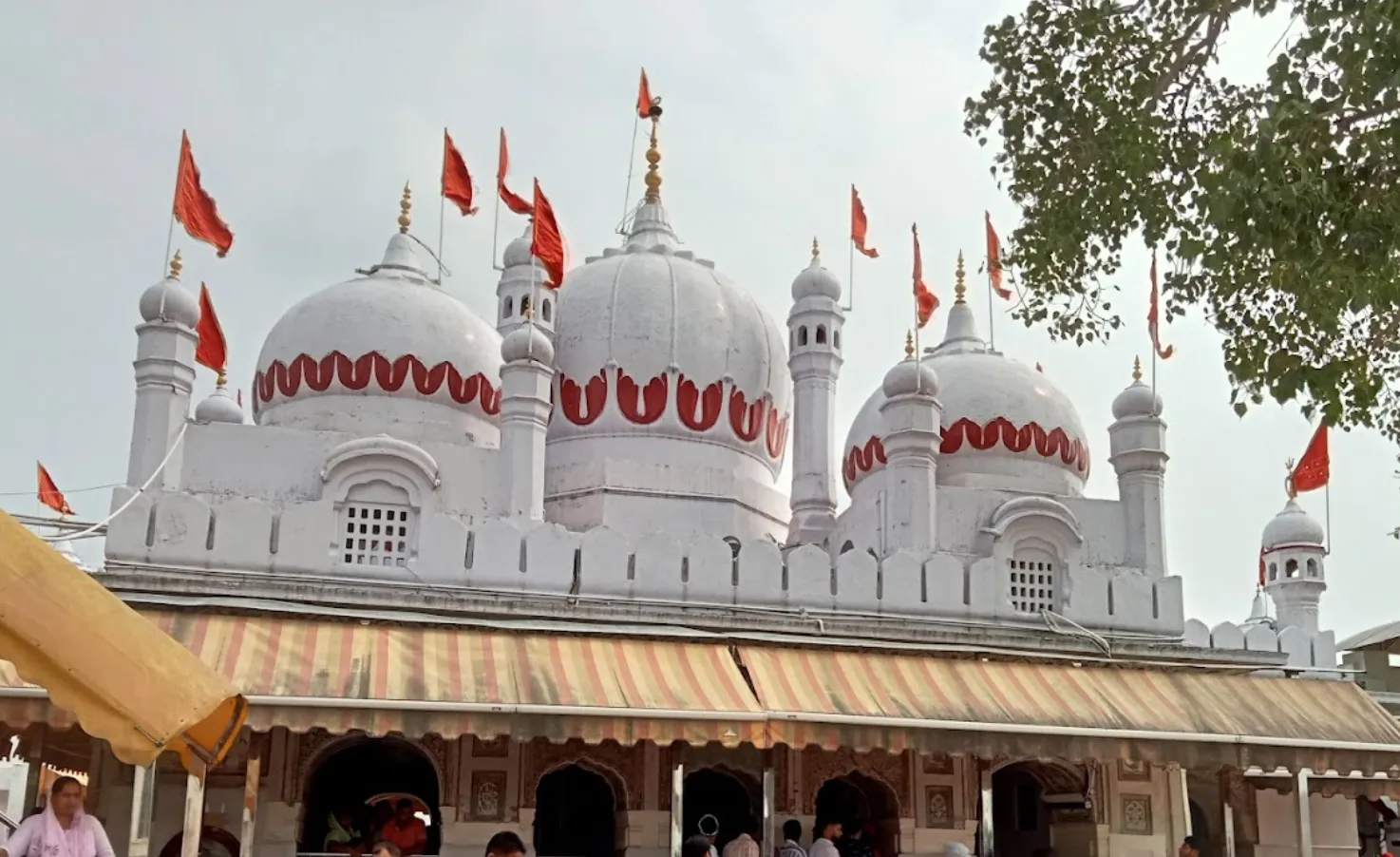
Mansa Devi Temple, Panchkula
Shivalik Foothills · ~12 km from Chandigarh
Maharaja Gopal Singh built this grand structure between 1811 and 1815. Devotees consider it a powerful wish-fulfilling shrine. Pilgrims tie coloured threads on a sacred tree as part of their spiritual vow — the most distinctive ritual on the entire circuit. The complex spans 100 acres with two main structures, managed by the Haryana Government Shrine Board.
Distance from Chandigarh
~12 km · 25 min
Accessibility
Flat complex · Zero climbing
Best For
First stop, pre-dawn start
Unique Ritual: Pilgrims tie coloured sacred threads on a specific tree within the complex as a devotional vow — a practice not replicated at any other temple on the circuit.
Read Full Temple Guide
02
Stop 2 · Kalka, Haryana
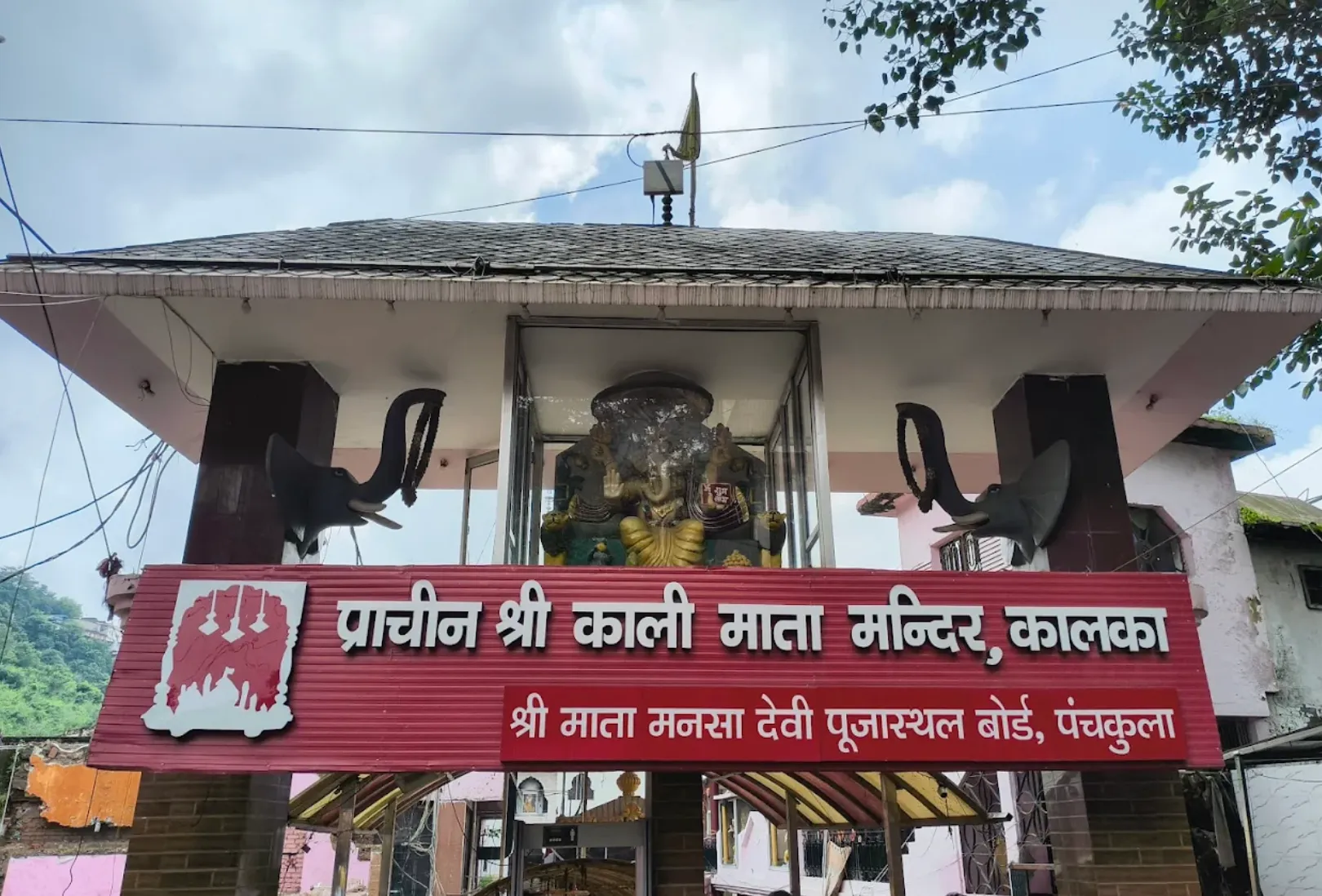
Kalka Devi Temple, Kalka
Kalka Bazaar · ~22 km from Mansa Devi
The entire town of Kalka takes its name from this specific goddess. The temple features a highly unique twelve-sided central chamber with a doorway on every single side — an architectural form found nowhere else in the region. Local legends suggest the Pandavas originally discovered the sacred stone here. This shrine marks the last plains territory before the steep Himalayan ascent begins.
Distance from Mansa Devi
~22 km · 45 min
Architecture
12-sided sanctum
Significance
Gateway to the Hills
Historical Note: The Pandava connection makes Kalka Devi among the oldest documented shrines on the circuit. The 12-sided chamber design is unique in North Indian temple architecture.
Read Full Temple Guide
03
Stop 3 · Bilaspur, HP
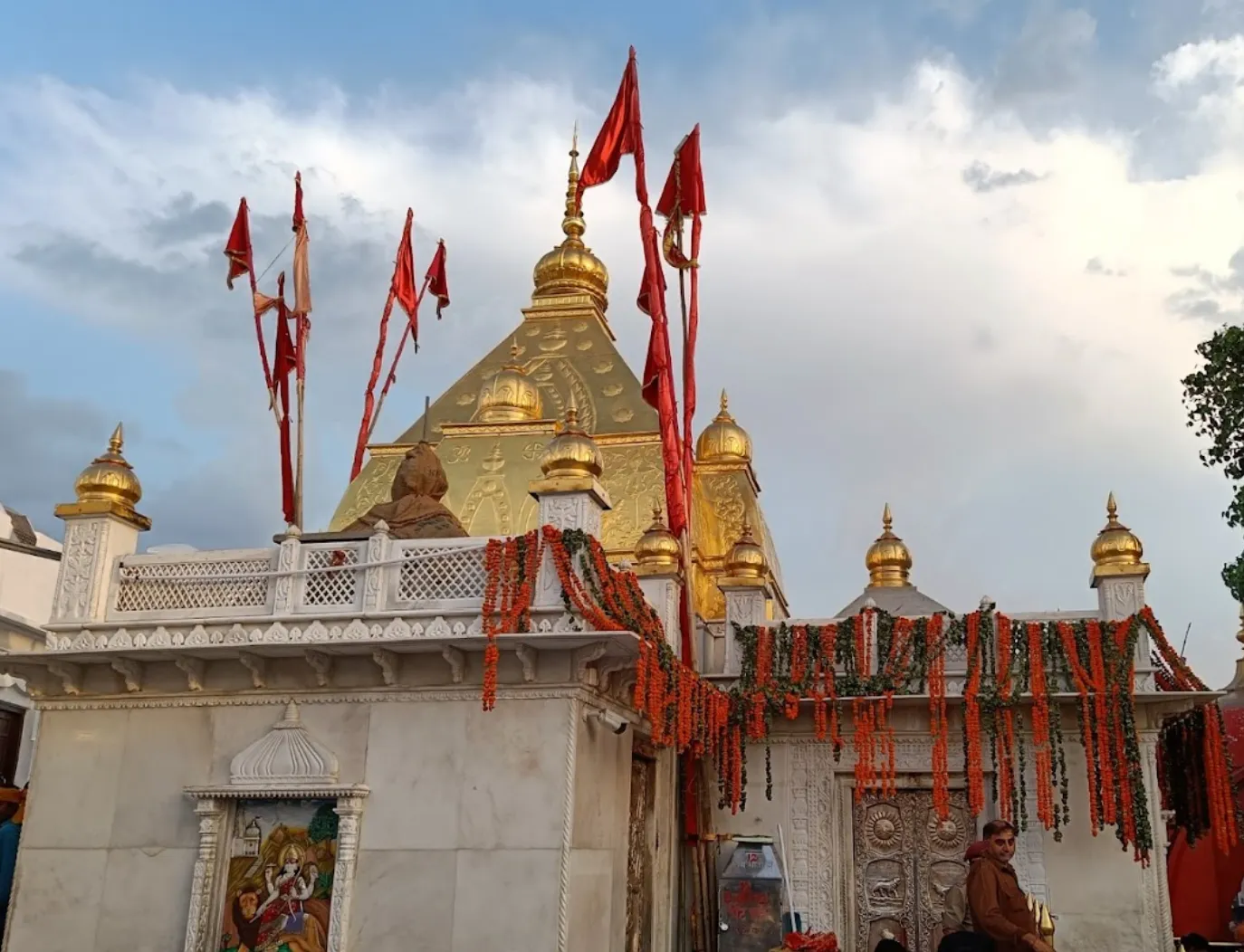
Naina Devi Temple, Bilaspur
Bilaspur District · Elevation 1,177 m
The eyes of Goddess Sati fell here on a steep triangular hill above Gobind Sagar Lake. The inner sanctum holds three idols: Kali Devi, the two golden eyes of Sati, and Lord Ganesha — a Tridevi-Ganesha composition found nowhere else on the circuit. A ropeway covers the ascent in minutes. Both Gobind Sagar Lake and Anandpur Sahib Gurudwara are visible from the hilltop terrace.
From Kalka
~100 km · 3 hrs
Sati Body Part
Eyes (Nayan)
Cable Car
From 7:00 AM daily
Queue Tip: Arrive at the cable car base by 7:00 AM. The queue builds fast after 8:30 AM. An early departure from Chandigarh helps you reach before the morning rush.
Read Full Temple Guide
04
Stop 4 · Una, HP
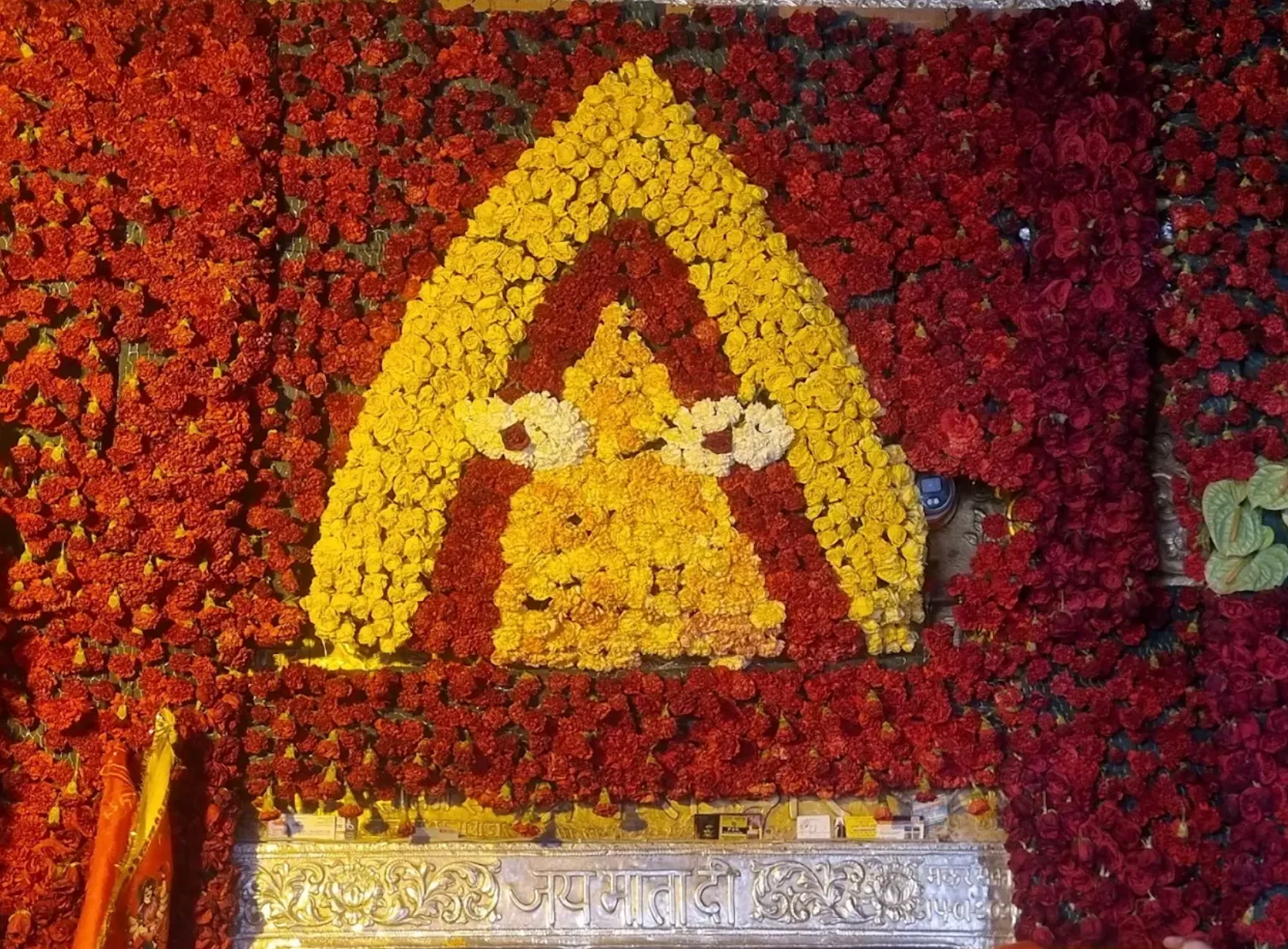
Chintpurni Devi Temple, Una
Una District · Highest footfall Devi temple in Himachal
The revered shrine of Maa Chhinnamastika — “the fulfiller of worries.” Descendants of Pandit Mai Das maintain an unbroken hereditary succession as head priests of roughly 300 years. Four ancient Shiva temples protect the Chintpurni complex from each cardinal direction. The mandatory Darshan Parchi is free and required for entry.
From Naina Devi
~113 km · 3 hrs
Sati Body Part
Feet (Charan)
Best Arrival
Before 9:00 AM
Queue Strategy: Before 9:00 AM = 20–45 min wait. After 10:30 AM weekends = 2–3 hour wait. Use the special darshan pass if general queue exceeds 45 minutes.
Read Full Temple Guide
05
Stop 5 · Kangra, HP
Jwala Ji Temple, Jwalamukhi
Jwalamukhi, Kangra District
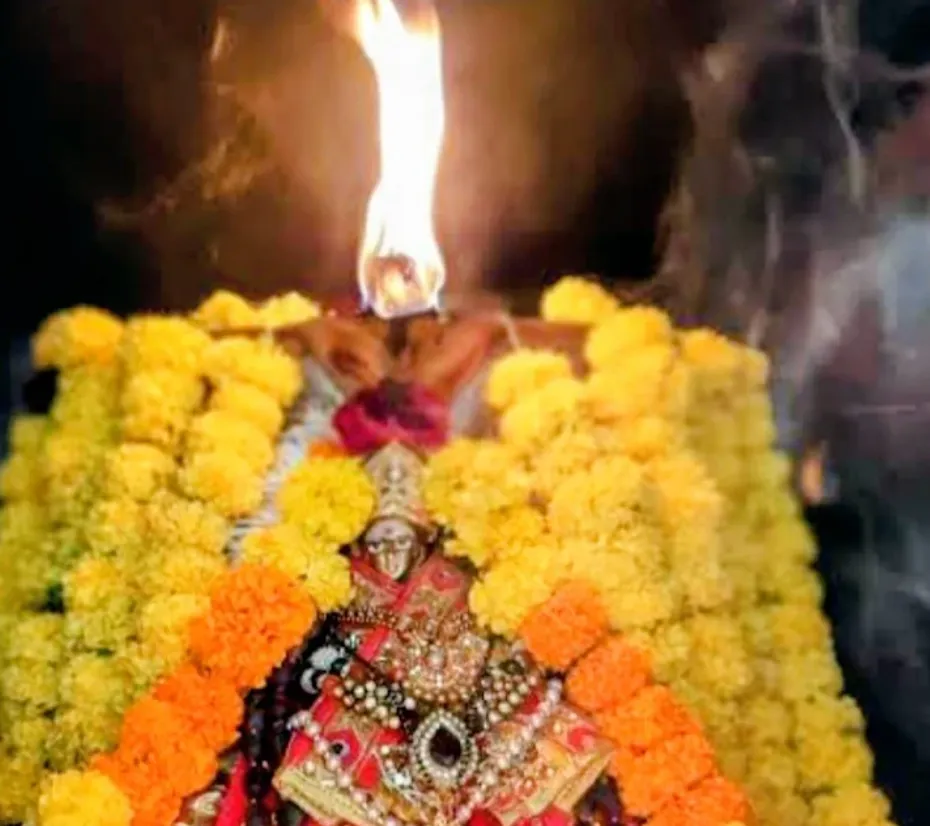
Goddess Jwalamukhi is worshipped through nine eternal natural gas flames — there is no sculpted idol inside. The central blue flame is the primary object of devotion. Emperor Akbar offered a solid gold canopy here; locals believe it transformed into an unknown metal. The Gorakh Dibbi cave inside the complex is where Guru Gorakh Nath meditated. Photography is strictly prohibited inside the sanctum.
From Chintpurni
~33 km · 1 hr
Sati Body Part
Tongue
Bhog Closure
11:30 AM–12:30 PM
Proximity Advantage: Chintpurni and Jwala Ji are only 33 km apart — making them the most efficient same-day combination on the entire 9 Devi circuit.
Read Full Temple Guide
06
Stop 6 · Kangra, HP
Baglamukhi Devi Temple, Bankhandi
Bankhandi, Dehra · Kangra District
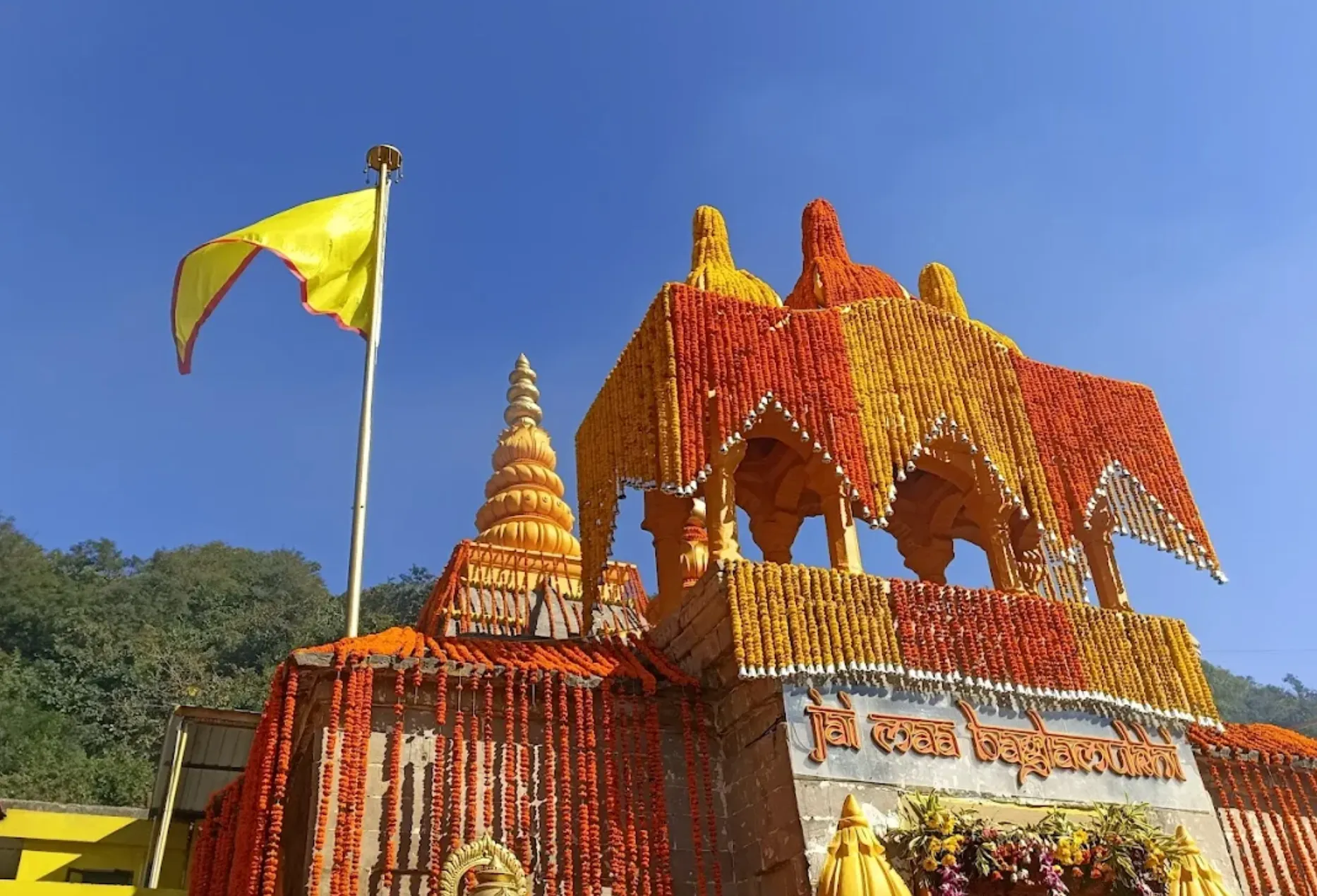
This honors the fierce Tantric goddess of paralysis and restraint. The entire complex is painted bright yellow — the sacred colour of Baglamukhi. The red chili fire (Mirchi Havan) is the signature ritual here, practiced to neutralize obstacles and enemies. This is one of only three Baglamukhi shrines in all of India. Just 20 km from Jwala Ji.
From Jwala Ji
~20 km · 40 min
Signature Colour
Entirely Yellow
Rarity
1 of 3 in all India
Tantric Significance: The red chili fire offering is practiced nowhere else on the circuit. The complete yellow colour scheme and Mirchi Havan make Baglamukhi one of the most visually and ritually distinctive stops on the entire 9 Devi Yatra.
Read Full Temple Guide
07
Stop 7 · Kangra Town, HP
Brajeshwari Devi Temple, Kangra Town
Kangra Town · One of India’s most vital Shakti Peethas
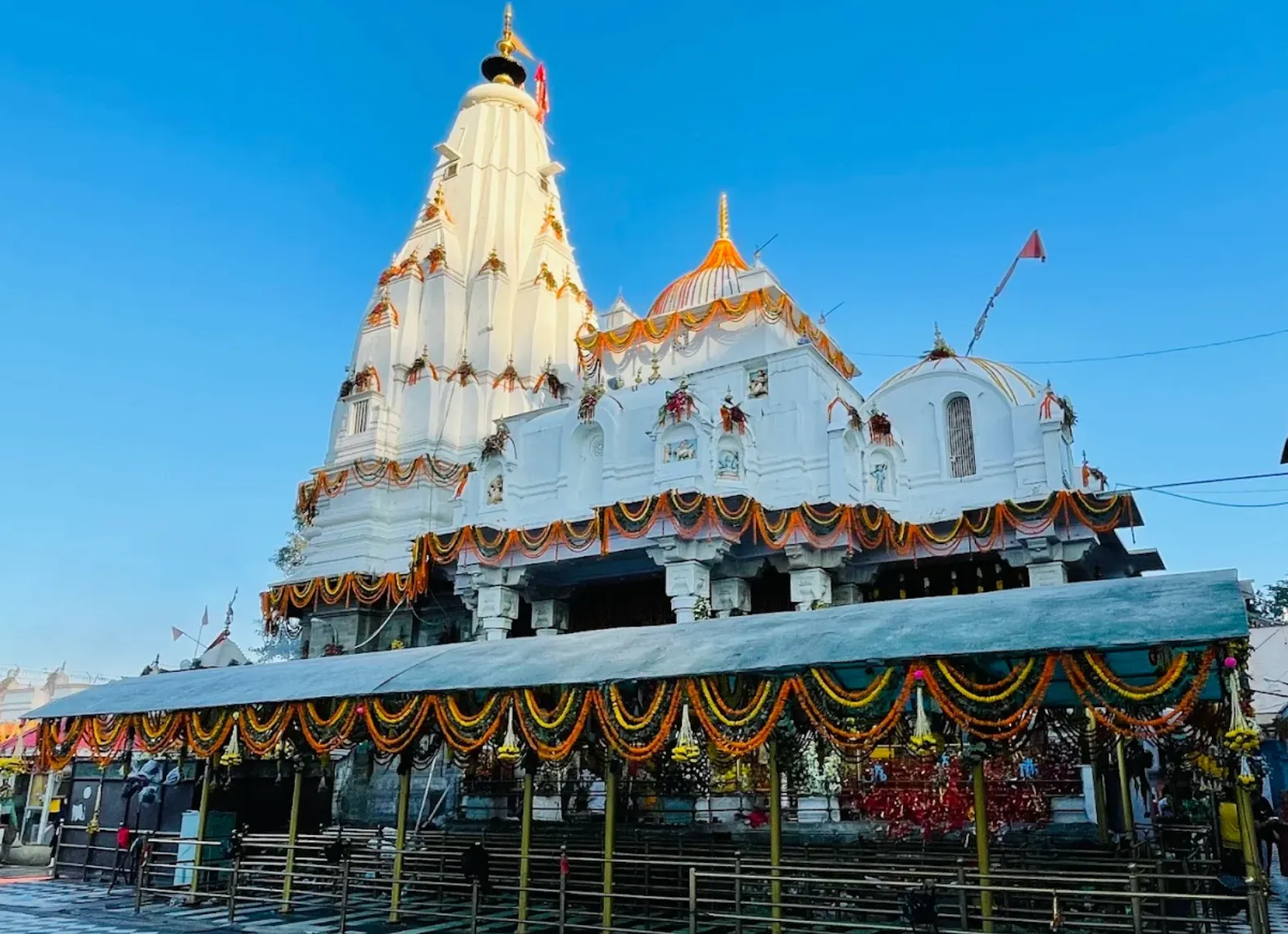
Ancient traditions claim the left breast of Sati fell here. A massive earthquake levelled the entire temple in 1905. The rebuilt three-dome structure beautifully symbolizes Hindu, Sikh, and Islamic religious harmony. During Makar Sankranti, priests cover the sacred stone entirely in butter for one full week — the Ghrit Mandal ritual. Bhog Aarti closes the sanctum 12:00–12:30 PM.
From Baglamukhi
~25 km · 50 min
Sati Body Part
Left Breast
Bhog Closure
12:00–12:30 PM
Planning Tip: Arrive before 11:00 AM to complete darshan well ahead of the Bhog closure. The market lane to the sanctum is quiet before 9:00 AM — the most peaceful window on the Kangra cluster day.
Read Full Temple Guide
08
Stop 8 · Kangra, HP
Chamunda Devi Temple, Kangra
Baner River · Near Dharamshala
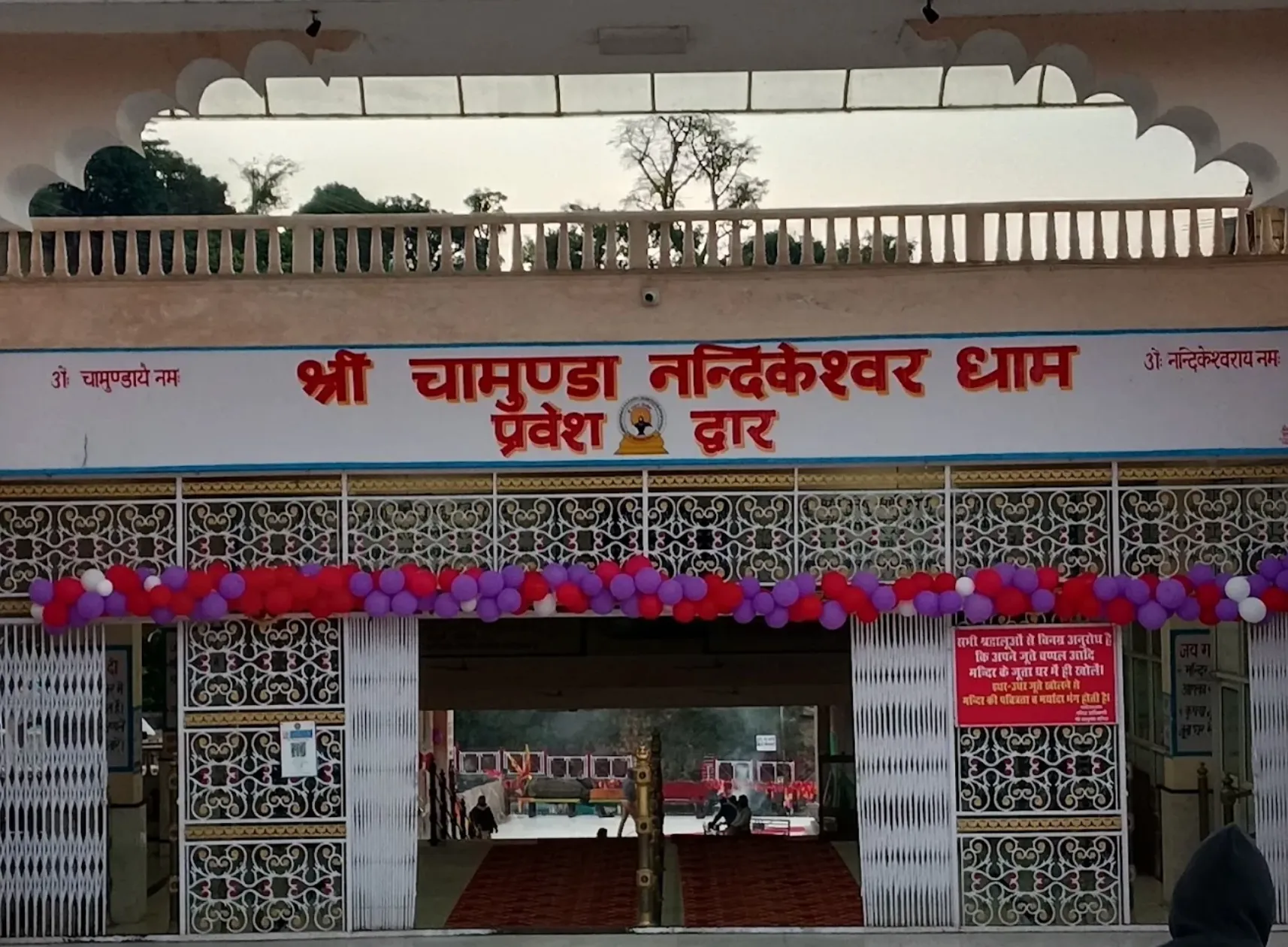
Dedicated jointly to Shakti and Shiva. Devotees worship Chamunda alongside a natural Shiva cave called Nandikeshwar inside the complex. Priests keep the main idol permanently covered in a red and black cloth. The original hilltop shrine requires a difficult 13 km mountain trek. The riverside Baner River location gives this temple a distinctly peaceful atmosphere.
From Brajeshwari
~25 km · 45 min
Unique Feature
Nandikeshwar cave inside
To Dharamshala
~16 km · 35 min
Dual Identity: Chamunda Devi is the only temple on the circuit where Shakti and Shiva are worshipped together in a single complex. The Nandikeshwar cave is a distinct darshan experience within the same visit.
Read Full Temple Guide
09
Final Stop · Katra, J&K
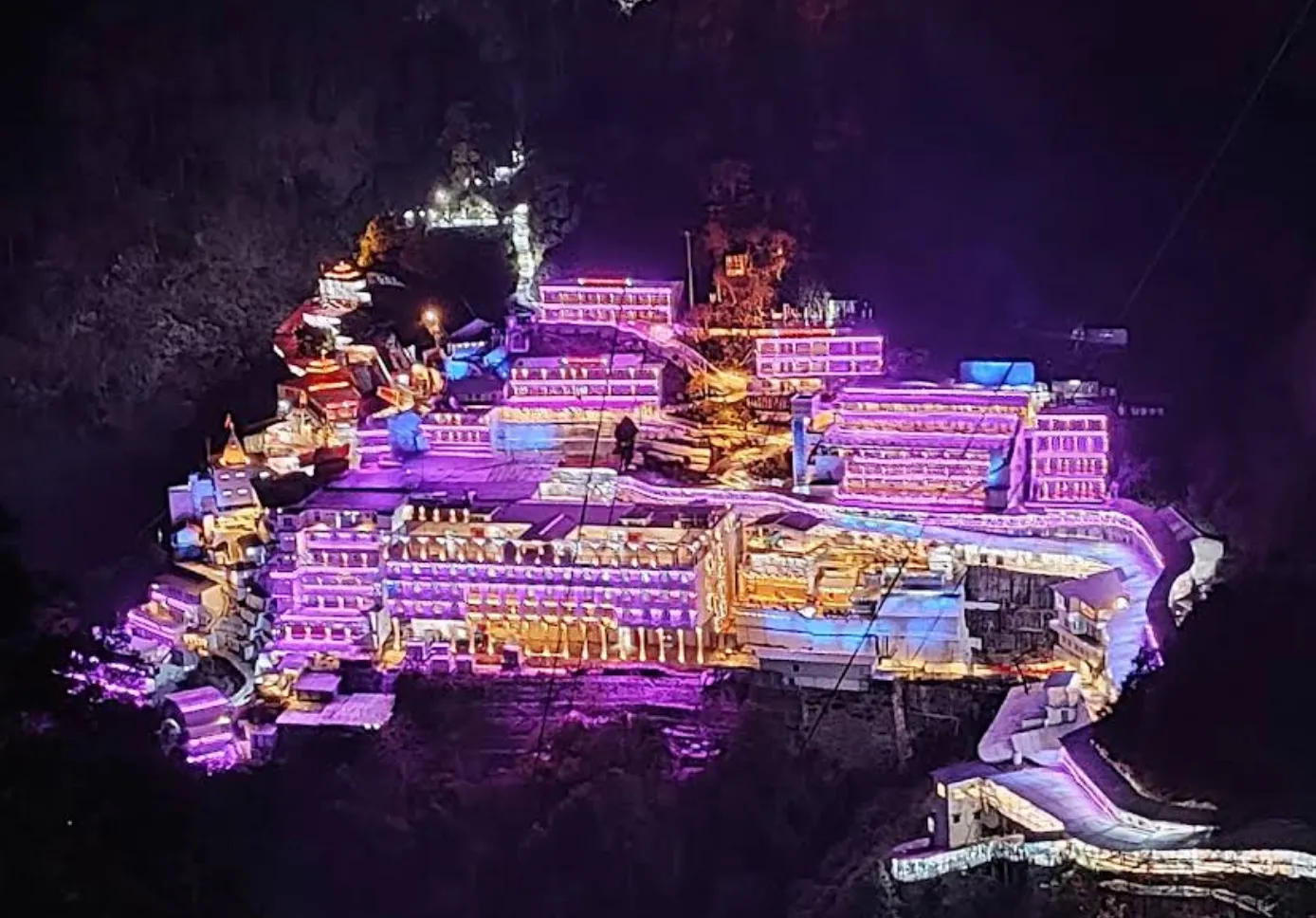
Vaishno Devi Temple, Katra
Trikuta Hills · Reasi, Jammu & Kashmir · 10 Million Annual Pilgrims
The most visited Shakti Peetha in India. The goddess manifests as three natural stones (Pindies) inside a mountain cave — representing Maha Kali, Maha Lakshmi, and Maha Saraswati. There are no sculpted statues. The trek from Katra covers roughly 13 kilometres. No yatra is spiritually considered complete without visiting the Bhairon Temple after the main cave darshan.
From Dharamshala
~237 km · 5–6 hrs
Trek Distance
~13 km from Katra
Yatra Parchi
Mandatory · Free
Yatra Parchi is Mandatory
Collect it on Katra arrival day at the registration counter — free of charge. Do not leave it for trek morning.
Verified Distances
Route Distances & Driving Logistics
Chandigarh is the optimal starting point. The sequence below moves geographically from southeast to northwest, minimizing backtracking and grouping temples efficiently by location cluster.
| Route Leg | Distance | Drive Time | Road Type |
|---|---|---|---|
| Chandigarh → Mansa Devi | 12 km | 25 min | City road |
| Mansa Devi → Kalka Devi | 22 km | 45 min | Highway |
| Kalka → Naina Devi | 100 km | 3 hrs | NH highway |
| Naina Devi → Chintpurni | 113 km | 3 hrs | Via Una |
| Chintpurni → Jwala Ji | 33 km | 1 hr | Local highway |
| Jwala Ji → Baglamukhi | 20 km | 40 min | Valley road |
| Baglamukhi → Brajeshwari | 25 km | 50 min | Kangra valley |
| Brajeshwari → Chamunda Devi | 25 km | 45 min | River road |
| Chamunda Devi → Dharamshala | 16 km | 35 min | Hill road |
| Dharamshala → Katra | 237 km | 5–6 hrs | NH 154A · Mountain |
The Chintpurni–Jwala Ji Proximity Advantage
At only 33 km apart, Chintpurni and Jwala Ji are the closest pair of temples on the circuit. Always plan them together on the same afternoon — separating them across different days wastes 3+ hours of driving. This pairing is the single most efficient sequencing decision for the entire 9 Devi circuit.
How Many Days?
9 Devi Yatra Itineraries — 5, 7, and 9 Day Plans
The full circuit generally requires 5 to 9 days by road from Chandigarh. The 7-day plan is open by default — it offers the best balance between comfortable driving, proper darshan timing, and overall travel pace.
5-Day Fast-Paced Route — For Time-Limited Pilgrims
Requires 4:30–5:00 AM Starts Every Day
This pace suits pilgrims who prioritise darshan completion over rest. Not recommended for senior pilgrims or families with young children.
Day 1
Chandigarh → Mansa Devi → Kalka Devi → Naina Devi
Early morning Mansa Devi and Kalka Devi darshan. Drive around 100 km from Kalka to Naina Devi. Use the cable car for hilltop darshan. Stay overnight near Naina Devi base town.
Day 2
Naina Devi → Chintpurni → Jwala Ji → Kangra Area
Depart around 5:00 AM to comfortably reach Chintpurni during the morning darshan window. Continue 33 km onward to Jwala Ji after the Bhog closure timing. Overnight in Jwalamukhi or Kangra.
Day 3
Kangra → Baglamukhi → Brajeshwari → Chamunda Devi
Cover the three Kangra cluster temples in one day. Begin early from Kangra. Reach Chamunda Devi by afternoon and continue around 16 km to Dharamshala for overnight stay.
Day 4
Dharamshala → Katra (237 km Drive)
Long mountain drive via NH 154A through Pathankot. The journey generally takes 5–6 hours depending on traffic and road conditions. Arrive Katra by evening and collect the mandatory Yatra Parchi.
Day 5
Vaishno Devi Full Trek + Bhairon Temple + Return
Begin the trek from Katra around 4:00–5:00 AM. Complete the 13 km ascent, cave sanctum darshan, and Bhairon Temple visit before descending back to Katra. Begin return journey afterward.
7-Day Recommended Pace — The Most Balanced Itinerary ⭐
Why 7 Days Is the Standard
Seven days allows proper rest between temples, manageable daily driving, alignment with temple closure timings, and a more comfortable Vaishno Devi trek experience. Families, senior pilgrims, and first-time yatris should ideally choose this plan.
Day 1 — Arrival Day
Arrive in Chandigarh + Evening Mansa Devi
Arrive from your home city by train or road. Stay near Chandigarh for an easy highway departure the next morning. Attend evening darshan at Mansa Devi if time and energy permit. Evening crowds are generally lighter.
Day 2 — Haryana Temples + Naina Devi
Mansa Devi → Kalka Devi → Naina Devi
5:00 AM: Morning darshan at Mansa Devi. Complete the sacred thread ritual before the main crowd arrives. 6:30 AM: Continue around 22 km to Kalka Devi. Visit the unique twelve-sided sanctum before beginning the highway drive toward Naina Devi.
10:00 AM: Reach Naina Devi base after the 100 km hill drive from Kalka. Use the ropeway for quicker hilltop access and panoramic Gobind Sagar views. Overnight near Naina Devi base town.
Day 3 — The Most Strategically Critical Day
Chintpurni → Jwala Ji (The 33 km Power Pair)
5:30 AM: Depart Naina Devi base. The drive to Chintpurni covers roughly 113 km and usually takes around 3 hours via Una. Arrive during the lower crowd window for faster darshan.
9:30 AM: Continue from Chintpurni to Jwala Ji (33 km · approx. 1 hour). Plan arrival after the Bhog closure timing for smoother sanctum access. Evening Shayan Aarti at Jwala Ji offers one of the calmest darshan experiences on the full circuit. Overnight stay in Jwalamukhi.
Day 4 — Kangra Cluster
Baglamukhi → Brajeshwari Devi → Chamunda Devi
7:00 AM: Depart Jwalamukhi for Baglamukhi Temple (20 km · around 40 min). Morning darshan at the famous yellow Tantric shrine. Continue toward Brajeshwari Devi.
9:00 AM: Drive around 25 km toward Brajeshwari Devi Temple in Kangra. Complete darshan before the midday Bhog closure. Continue another 25 km to Chamunda Devi and later drive around 16 km to Dharamshala for overnight stay.
Day 5 — The Long Mountain Drive
Dharamshala → Katra (237 km · 5–6 Hours)
7:00 AM: Depart Dharamshala for Katra through Pathankot and the Jammu highway corridor. The 237 km journey generally requires 5–6 hours including meal and fuel stops.
Critical action today: Collect the Yatra Parchi after arriving in Katra. The registration is mandatory before beginning the Vaishno Devi trek.
Day 6 — The Culmination
Vaishno Devi Full Trek + Bhairon Temple
4:00 AM: Begin the 13 km trek from Katra during the cooler pre-dawn hours. Reach the cave sanctum and complete darshan of the three sacred Pindies representing Maha Kali, Maha Lakshmi, and Maha Saraswati.
Important: The Bhairon Temple visit remains an essential final step according to local tradition. Return to Katra by afternoon and rest overnight.
Day 7 — Return Journey
Katra → Home or Optional Amritsar Golden Temple
Option A: Return toward Chandigarh by road. Option B: Travel onward to Amritsar for Golden Temple darshan before returning home.
9-Day Comprehensive Tour — Relaxed Pace with Sightseeing
Best For Families, Senior Pilgrims & First-Time Yatris
The 9-day itinerary adds comfortable rest days and local sightseeing. It is ideal for elderly pilgrims, families with children, and first-time visitors.
Day 1
Travel to Chandigarh
Arrive from your home city. Rest and prepare for the yatra beginning the next morning.
Day 2
Mansa Devi, Kalka Devi + Chandigarh Sightseeing
Morning darshan at both Haryana temples. Relaxed afternoon Chandigarh sightseeing. Overnight Chandigarh.
Day 3
Naina Devi + Chintpurni
Early departure for Naina Devi. Continue around 113 km onward toward Chintpurni after darshan. Overnight near Una or Chintpurni.
Day 4
Jwala Ji + Baglamukhi
Morning drive to Jwala Ji followed by Baglamukhi Temple located around 20 km away. Overnight in Kangra or Jwalamukhi.
Day 5
Brajeshwari Devi + Chamunda Devi
Morning Brajeshwari darshan followed by Chamunda Devi. Continue around 16 km onward to Dharamshala for overnight stay.
Day 6
Dharamshala Rest Day + McLeodganj Sightseeing
Relaxed sightseeing around McLeodganj, Tibetan Monastery, Bhagsu area, and Dharamshala local markets.
Day 7
Dharamshala → Katra + Yatra Parchi Collection
Drive around 237 km from Dharamshala to Katra. Collect Yatra Parchi after arrival and rest early for the next morning trek.
Day 8
Vaishno Devi Full Trek + Bhairon Temple
Pre-dawn trek from Katra. Complete cave sanctum darshan and Bhairon Temple visit before returning to Katra for overnight rest.
Day 9
Return or Amritsar Golden Temple
Optional drive toward Amritsar before final return journey home.
When to Travel
Best Time for 9 Devi Yatra — Season by Season
The circuit is open year-round. Season choice significantly affects queue times at Chintpurni and Vaishno Devi, road conditions on the Dharamshala–Katra stretch, and the overall darshan quality at each stop.
March–April Excellent
Spring Navratri. Festival atmosphere and pleasant weather. Crowds peak — add buffer time at every temple. Book 3–4 weeks in advance.
May–June Good
Comfortable temperatures in hills. Manageable queues outside weekends. Good choice for families avoiding Navratri peak.
July–Sept Caution
Monsoon. Mountain landslide risk on Dharamshala–Katra route. Roads passable but drive times increase 20–30%. Carry rain gear.
Sept–Oct ⭐ Best
Autumn Navratri — peak atmosphere. The week immediately after Navratri ends is the single best time: post-crowd, pre-winter, exceptional Naina Devi lake visibility.
Nov–Feb Manageable
Very cold in hills. Vaishno Devi trek challenging in January–February. Crowds minimal — shortest queue times of the year at all temples.
All Are Welcome
Accessibility for Elderly and Differently-Abled Pilgrims
All nine temples have specific provisions for older or differently-abled pilgrims. The 9 Devi Yatra is highly accessible when planned correctly — mode of transport and sequence matter enormously for senior pilgrims.
Mansa Devi & Kalka Devi
Both feature entirely flat complexes — zero climbing required
Wheelchair access available at both locations
First two stops — visit before fatigue builds up
Naina Devi
Cable car (ropeway) reaches the hilltop in minutes
No foot trail required when using the ropeway
Cable car queue can be long — arrive before 8:00 AM
Jwala Ji & Baglamukhi
Both shrines are highly accessible with minimal walking
Flat sanctum approach at both temple complexes
Most elderly-friendly pair on the entire circuit
Vaishno Devi
Ponies and palanquins available for the full 13 km ascent
Battery-operated vehicles operate on certain sections
Helicopter service to Sanjichhat — book well in advance
Book Your Taxi
9 Devi Yatra Taxi Package from Chandigarh
Our experienced Palampur-based drivers cover the full 9 Devi circuit from Chandigarh — including the Kangra cluster and the long Dharamshala–Katra mountain drive. Transparent single-quote pricing. No hidden charges.
| ✓ Included in Package | ✗ Not Included |
|---|---|
| ✓Private taxi for the full circuit from Chandigarh | ✗Hotel accommodation |
| ✓Driver experienced in Kangra Valley & Katra route | ✗Prasad, offerings, donations |
| ✓All parking, state tolls, driver allowances | ✗Special darshan pass fees |
| ✓Pickup from Chandigarh Railway Station, Airport, or Bus Stand | ✗Meals during the circuit |
| ✓Return to Chandigarh or forward drop to Amritsar/Pathankot | ✗Travel insurance |
Call or WhatsApp 98053 12304 with your travel date, group size, and starting point. We confirm fare and driver within 2 hours.
Vehicle Options
4
Swift Dzire
Couples & solo
6
Ertiga
Small family
7
Innova Crysta
Luggage & seniors
12
Tempo Traveller
Large yatra group
Common Questions
9 Devi Yatra — Frequently Asked Questions
Entity-driven answers to the most common planning questions about the Nau Devi Darshan circuit.
What are the 9 Devi names in the Nau Devi Yatra?
The nine Devis are: Mansa Devi (Panchkula, Haryana), Kalka Devi (Kalka, Haryana), Naina Devi (Bilaspur, HP), Chintpurni (Una, HP), Jwala Ji (Jwalamukhi, Kangra, HP), Baglamukhi Devi (Bankhandi, Kangra, HP), Brajeshwari Devi (Kangra Town, HP), Chamunda Devi (Baner River, Kangra, HP), and Vaishno Devi (Katra, Reasi, J&K).
What are the 7 Devi names in Himachal Pradesh?
The seven prominent temples in Himachal Pradesh within this circuit are: Naina Devi (Bilaspur), Chintpurni (Una), Jwala Ji (Jwalamukhi), Brajeshwari Devi (Kangra), Chamunda Devi (Kangra), and Baglamukhi (Bankhandi). The seventh is typically Sheetla Devi in Una district, though some guides substitute this with a local Peetha.
How many days does the 9 Devi Yatra take?
The complete circuit requires 5 to 9 days by road from Chandigarh. A 7-day itinerary is the standard recommendation — it balances darshan quality with manageable daily driving of 4–6 hours. A 5-day plan is possible but requires 4:30–5:00 AM starts every day and is not suitable for senior pilgrims or families with children.
What is the best time for 9 Devi Yatra?
Autumn Navratri (September–October) offers the best combination of clear weather and vibrant spiritual atmosphere. Spring Navratri (March–April) is the second-best period. The week immediately after Navratri ends in October is arguably the single best time: post-crowd, pre-winter, and excellent visibility at Naina Devi.
Is Vaishno Devi Yatra Parchi mandatory?
Yes. The Yatra Parchi is strictly mandatory to begin the trek from Katra. It is issued completely free of charge at the official registration counter near the base camp in Katra. Collect it on the evening of your Katra arrival day — not on the morning of the trek. Without a valid Yatra Parchi, pilgrims are not permitted on the trek route.
What is the correct order to visit the 9 Devi temples?
The standard sequence flows geographically from southeast to northwest from Chandigarh: Mansa Devi → Kalka Devi → Naina Devi → Chintpurni → Jwala Ji → Baglamukhi → Brajeshwari → Chamunda Devi → Vaishno Devi. This order minimizes backtracking and groups the geographically close temples (Chintpurni–Jwala Ji at 33 km, and the four Kangra temples within 70 km of each other) efficiently.
How much does the 9 Devi Yatra cost?
A standard 7-day trip costs approximately ₹15,000 to ₹28,000 per person. This includes a private taxi for the full circuit, standard hotel stays at each location, and meals. Cost reduces significantly for groups of 4–6 sharing the vehicle. Katra hotel prices surge 2–3× during Navratri — book at least 3 weeks in advance during peak dates.
What is the deeper significance of the 9 Devi Yatra?
Completing darshan of all nine manifestations is believed to grant the cumulative spiritual merit of visiting all 51 Shakti Peethas across India. The nine temples together represent the complete spectrum of the divine feminine — from the wish-fulfilling Mansa Devi to the eternal flames of Jwala Ji to the cave-form Vaishno Devi. The circuit is considered one of the most spiritually complete regional pilgrimages available in North India.
Begin Your Yatra
Book Your 9 Devi Yatra Taxi Today
Call or WhatsApp 98053 12304 with your travel date, group size, and starting city. Fare confirmed within 2 hours. Circuit-experienced driver. Transparent pricing.